5 practical Shopify PIM use cases, with real numbers
From cleaning up bad supplier feeds to multilingual markets and cross-sell collections, here are five concrete Shopify PIM-style use cases with real results, including the G&F Verpakkingen case.
Practical tips, strategies, and insights on AI content management, SEO, and e-commerce growth for Shopify stores.

From cleaning up bad supplier feeds to multilingual markets and cross-sell collections, here are five concrete Shopify PIM-style use cases with real results, including the G&F Verpakkingen case.

You may not need a separate PIM at all. Shopify's own metafields, standard taxonomy, and variant structure can serve as a lightweight product data model — if they're filled correctly.

Classic PIM, AI-driven enrichment, and manual data entry all solve product data problems differently. Here's a direct, field-by-field comparison to help you pick the right approach for your Shopify catalog.

PIM is a term that gets thrown around a lot, but few Shopify merchants can say exactly what it solves. Here's a plain explanation of what a PIM is, when you need one, and why storage isn't the same problem as quality.

A classic PIM centralizes product data and distributes it across channels. Useful, but it stops there. Discover what a Shopify PIM does and doesn't solve, and how AI enrichment closes the gap.

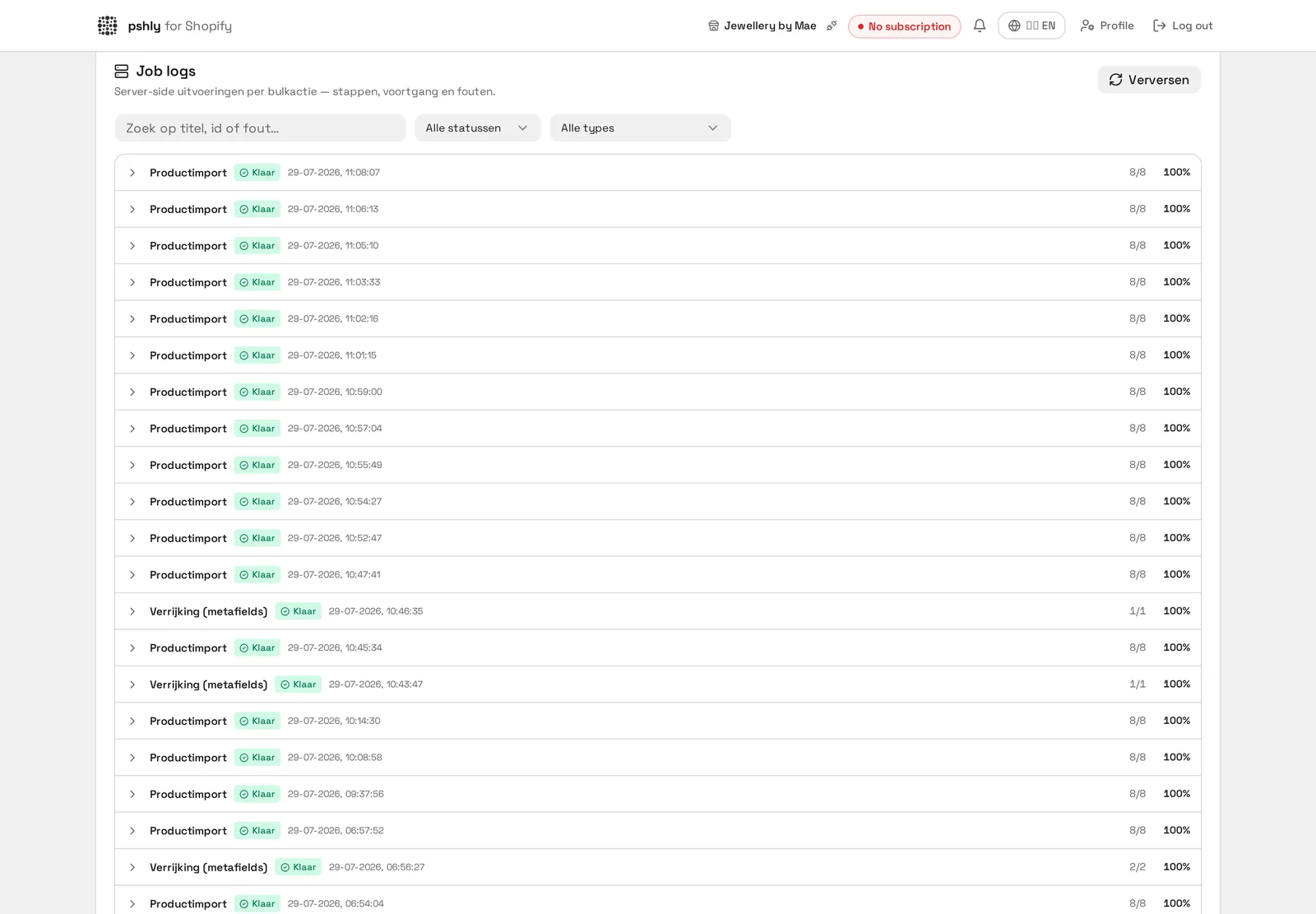
Bulk enrichment of thousands of products takes too long to keep your browser open. Read how server-side jobs, realtime progress, and automatic retries solve that problem.

Bad URL handles cost you rankings and click-through rate, but changing them carelessly breaks existing links. Read how to safely improve handles with automatic 301 redirects.

Suggesting a bracelet with earrings works better than showing more earrings. Read how AI recognizes complementary products based on image, color, material, and style.

Automatic collection suggestions only work well once they're protected against false positives. Read how brand detection, chunking, and post-validation enforce that.

Filler words like elegant, stylish, and luxury produce duplicate titles and no search volume. See how automatic filtering and dedupe fix this, with real-world numbers.

Not every product needs to be optimized. Read how to keep seasonal products and sold-out items out of bulk jobs with a Shopify tag or a manual per-product toggle.

With pshly.ai's MCP server, you query your Shopify catalog directly from ChatGPT, Claude, or Cursor. Read how the OAuth connection and security work.

How a single AI workflow fills your entire Shopify catalog: metafields from text and images, working color swatches, automatic product categories and smart collection assignment.

Shopify Markets makes selling internationally easy, but without a deliberate SEO approach you lose rankings. Here's how to set up hreflang, translations and local signals correctly.

Well-structured FAQ blocks attract both Google rich snippets and citations in ChatGPT and Perplexity. Here's how to build them without bloating the page.

Variants quickly create duplicate content and ranking cannibalization. Here's how to build a variant strategy that actually performs in Google and on marketplaces.

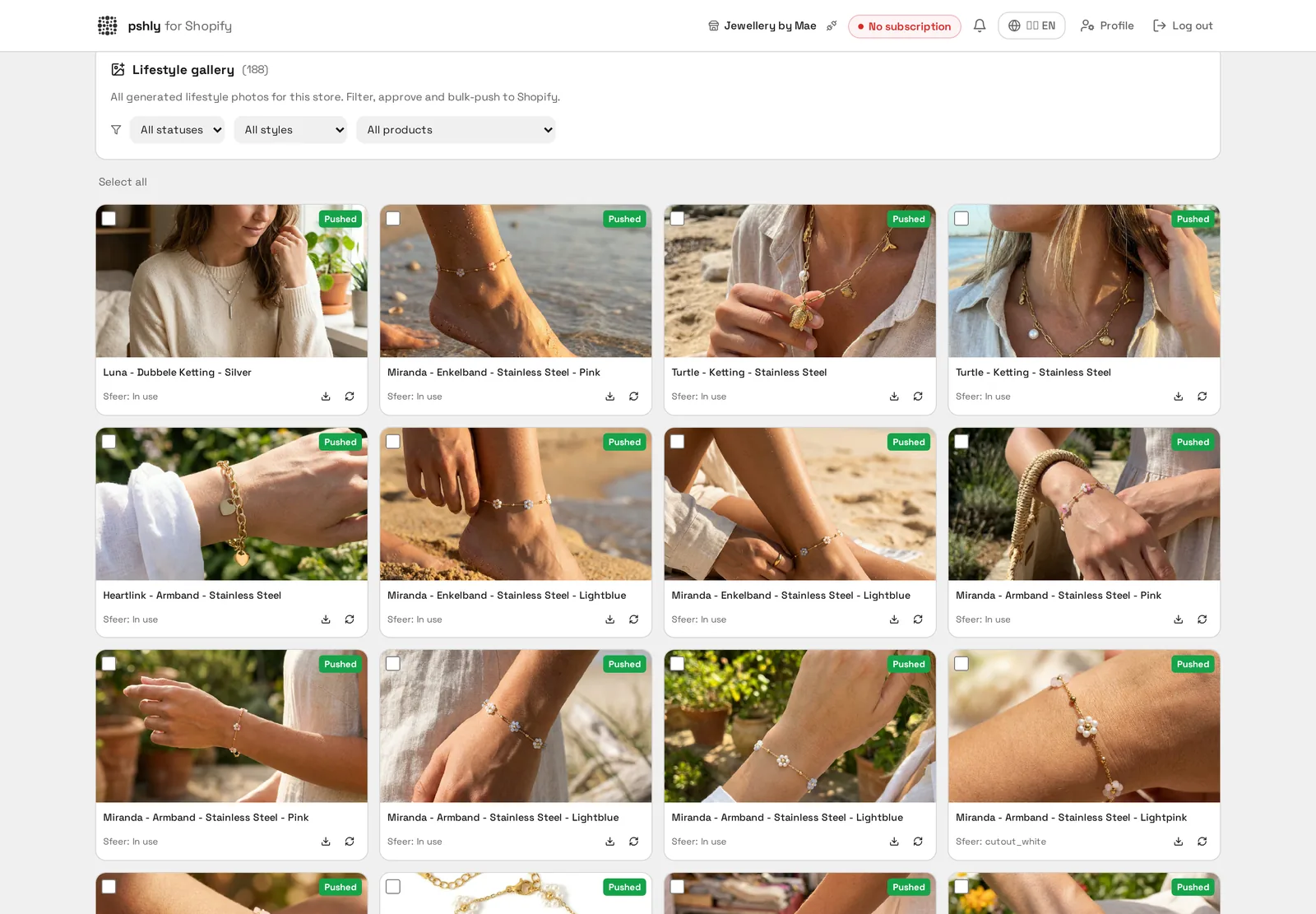
Generate lifestyle scenes, white packshots, cutouts and studio photos in seconds. Learn which preset to use when, and how to bulk-upgrade your entire catalog visually.

Why packshots alone no longer suffice and how lifestyle imagery can lift average conversion rates by 20-40%.

Image alt tags are one of the most underrated SEO quick wins. Learn how to generate them automatically across your entire Shopify catalog without sacrificing quality.

How to generate product descriptions, collections, alt tags and lifestyle images in parallel for hundreds of products — without losing quality.

Standalone tools for copy, images and SEO no longer cut it. Discover how an integrated AI content stack prepares your Shopify store for traditional search engines and AI search environments alike.

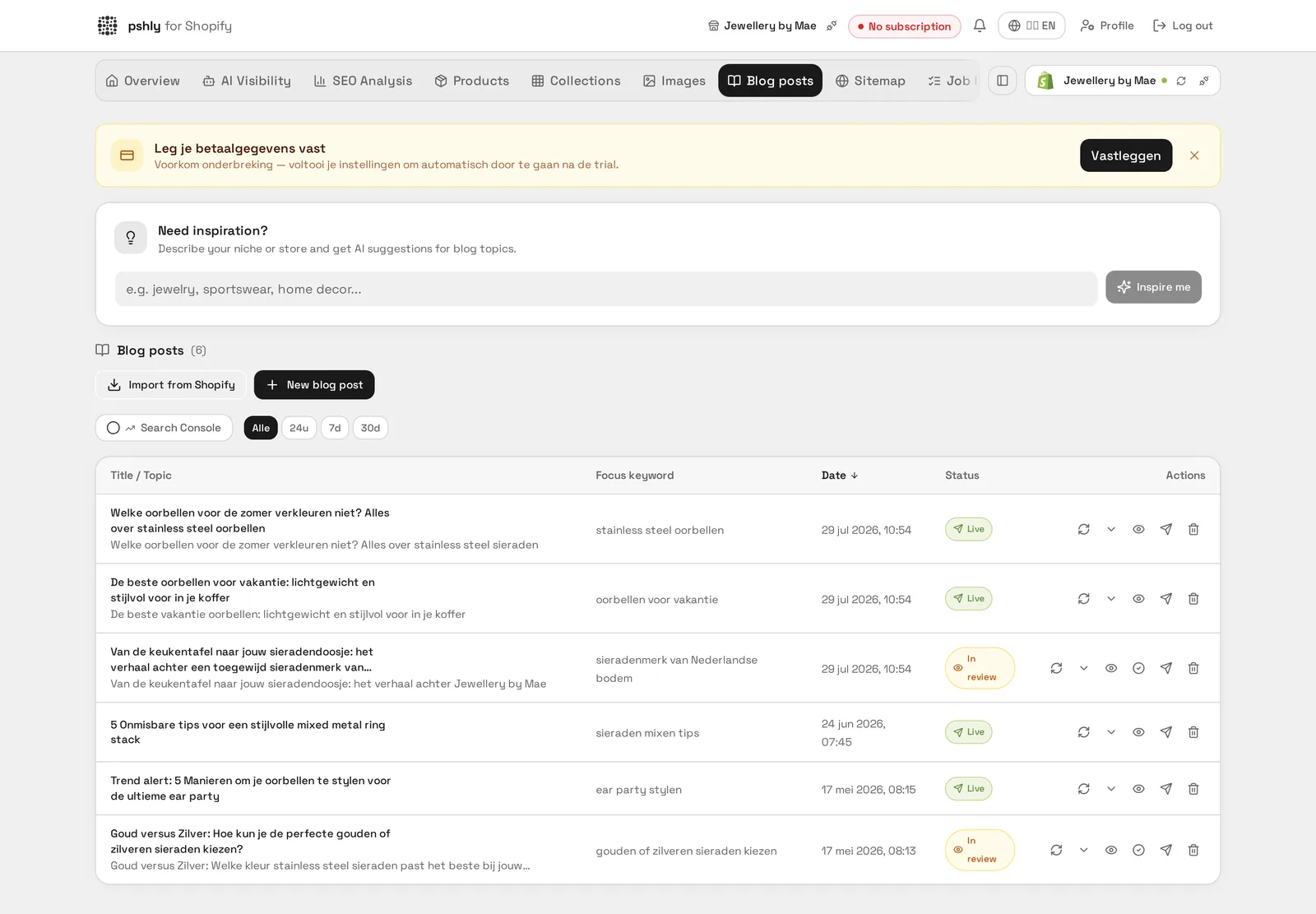
Discover how AI-powered tools automatically generate product descriptions, collection pages, and blog posts — and why data-driven content is the future.

From structure to SEO: everything you need to know about writing product descriptions that convince customers and rank well in Google.

Your Search Console is full of valuable insights. Learn how to use this data to find content gaps and improve existing pages.

Alt tags aren't just for accessibility. They're one of the fastest ways to drive more organic traffic through Google Images.

From 10 to 1,000 products? Discover how smart automation helps you consistently produce quality content without extra staff.

ChatGPT, Perplexity, and Google AI Overviews are changing how consumers search. Is your content ready for this new reality?

From technical SEO to content and link building: a complete checklist to maximize your Shopify store's visibility in search engines and AI search.

Collection pages rank on high-volume keywords, yet are rarely optimized. Discover how to transform them into traffic machines.

From product pages to blogs and social proof: build a content strategy that combines organic traffic, conversion, and authority.

Internal links are one of the most underestimated SEO factors. Learn how to use them strategically to boost your Shopify store's rankings.
Ready to take your Shopify content to the next level?