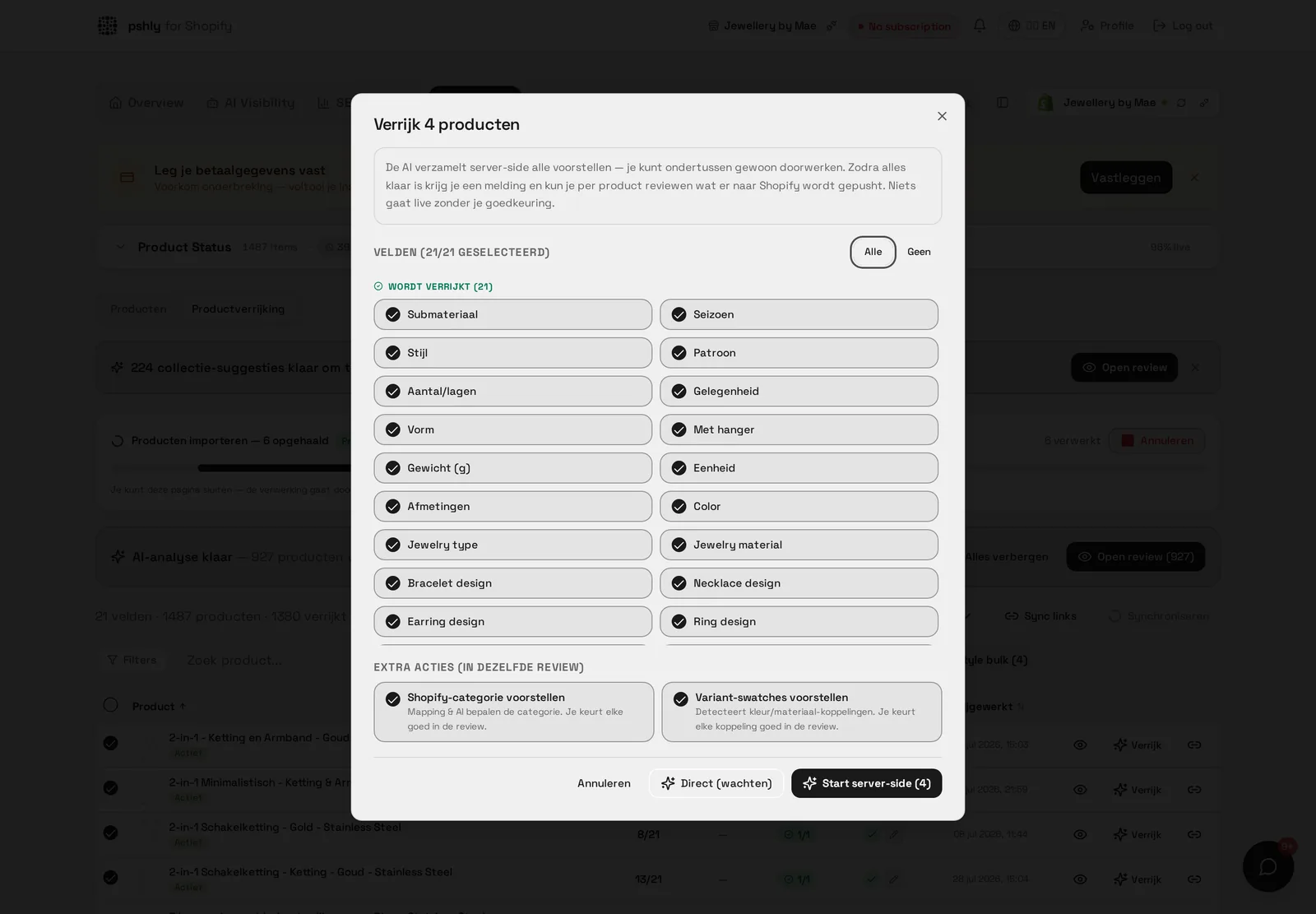
Product data problems rarely show up as an abstract "our PIM strategy is unclear." They show up as specific, recognizable situations: a supplier feed full of garbage titles, a B2B catalog missing half its technical specs, a store expanding into a second language, seasonal products cluttering search results, or collections that don't cross-sell anything. Below are five concrete use cases, including real numbers from a customer case.
1. Cleaning up poor supplier feeds
Many Shopify stores import products directly from a supplier or distributor feed, and those feeds are rarely written with SEO or conversion in mind. Typical symptoms: titles like "BOX-450x300x200-BR" instead of a readable product name, descriptions copied verbatim across dozens of competitor sites, and URL handles containing raw SKU codes.
The fix isn't re-keying every product by hand — at scale that's simply not realistic. AI enrichment reads the raw feed data plus product images, and generates clean, unique titles, readable descriptions, and proper URL handles, while automatically setting up 301 redirects so existing rankings aren't lost in the process.
2. B2B catalogs with technical specifications
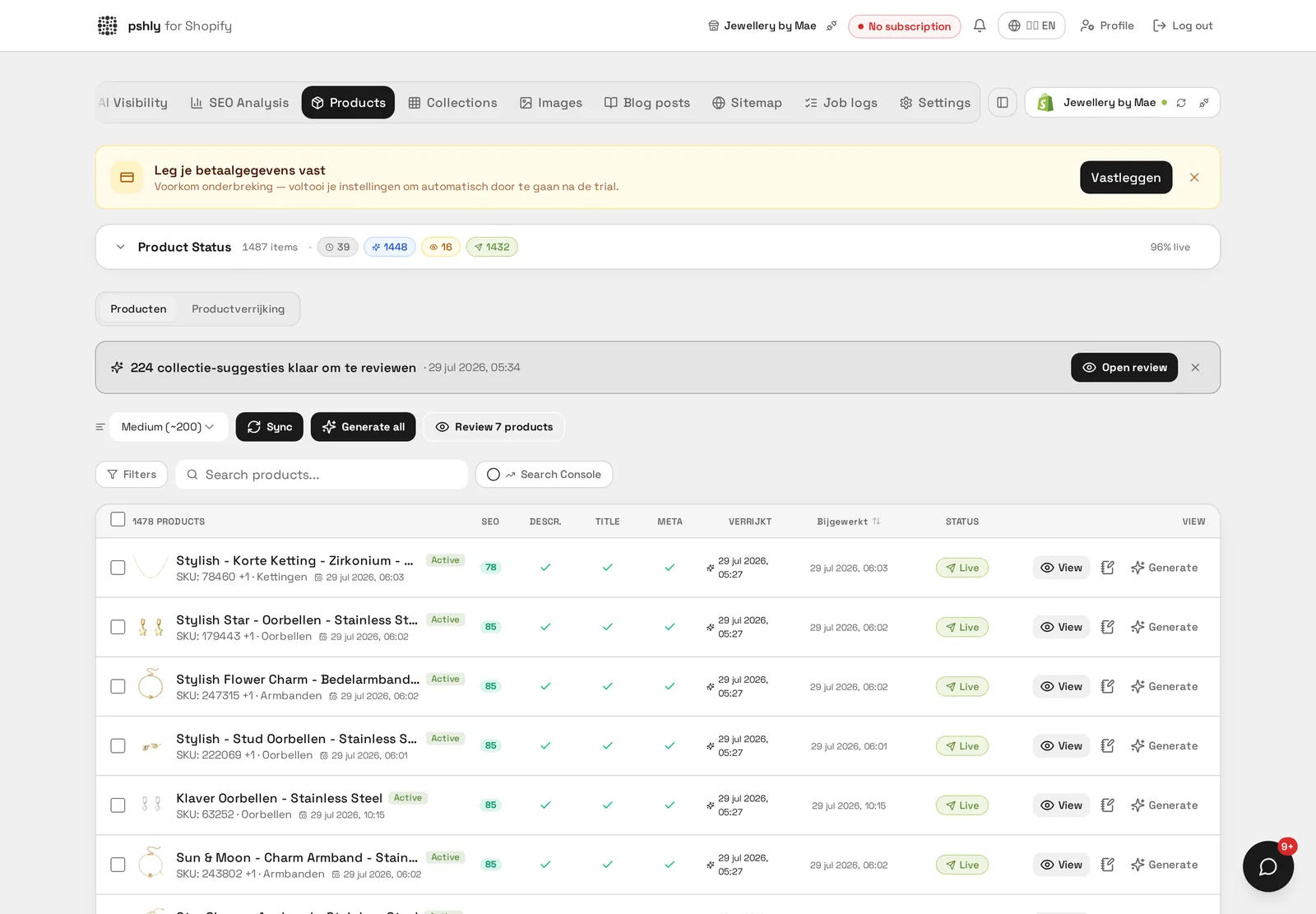
B2B buyers filter and compare on specs: dimensions, load capacity, material grade, certification. When those fields live only inside a PDF spec sheet or a supplier's raw description, Shopify's filtering and search can't use them. Metafield definitions solve the schema problem, but filling them for a catalog of several hundred SKUs by hand is a multi-week task most teams never fully finish.
This is the exact situation G&F Verpakkingen was in — a B2B supplier of shipping boxes and packaging materials, with 512 active products, each needing dimension, flute type, and material metafields filled consistently. Rather than manually entering specs product by product, pshly.ai analyzed existing descriptions and images to fill in metafields, clean up hundreds of inconsistent titles, and write optimized meta descriptions across the full catalog. The result: a 34% increase in organic search clicks after the catalog-wide enrichment.
3. Multilingual markets
Expanding into a second or third market usually means translating product data, but a literal translation of a poorly optimized English title produces an equally poor result in the new language. The opportunity is to re-optimize per market: search behavior, terminology, and even preferred product framing differ between, say, German B2B buyers and French consumer shoppers.
Treating each market's catalog as its own enrichment pass — rather than a single translation job — means titles and meta descriptions are written with that market's actual search terms in mind, not just a direct translation of the source language.
4. Seasonal and excluded products
Seasonal catalogs (holiday decorations, summer gear, clearance items) create a recurring cleanup problem: products need to be enriched quickly before a short selling window, then correctly excluded from search indexing or SEO focus once the season ends, without leaving behind broken URLs or orphaned metafields. A store that manually enriches 300 seasonal SKUs every year, then manually unpublishes or de-indexes them, spends real hours on a task that repeats every cycle.
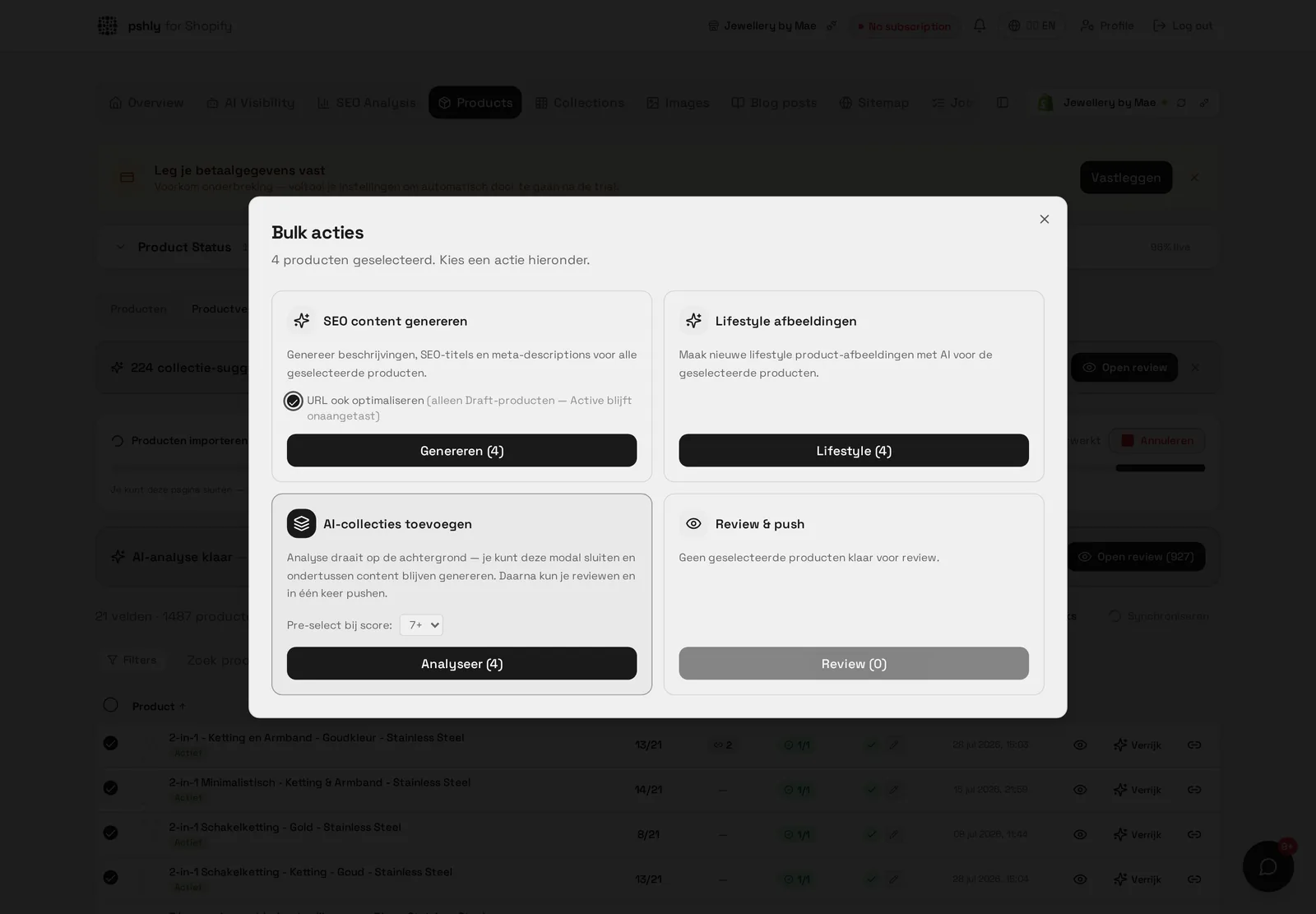
Bulk enrichment tools that run server-side let a merchant queue an entire seasonal collection for enrichment ahead of the season, and just as importantly, apply the same bulk logic to exclude or archive products afterward without breaking URL structure the following year.
5. Collections and cross-sell matching
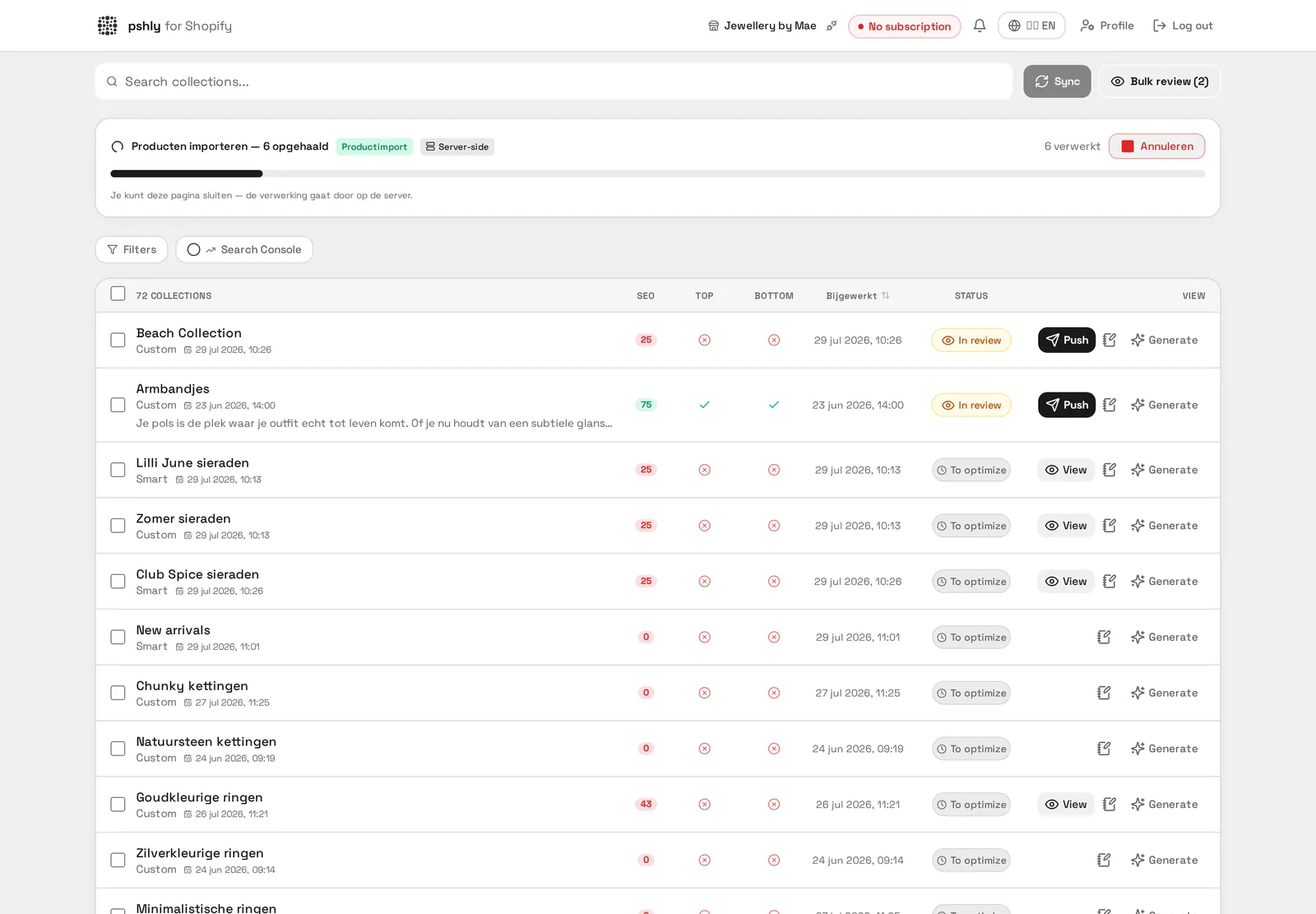
Collections built manually often miss obvious cross-sell relationships simply because nobody has reviewed the full catalog closely enough to spot them — a customer buying shipping boxes in one size who should also see matching tape and void fill, for example. Image and attribute analysis across the catalog can surface these relationships based on shared materials, categories, or use case, rather than relying on someone remembering to link them manually.
For a packaging supplier like G&F Verpakkingen, correctly tagged metafields (box dimensions, flute type, intended use) become the basis for smarter, automatically groupable collections — customers searching for one box size see genuinely relevant related products, not a generic "you might also like" list.
The common thread
Each of these five use cases looks different on the surface, but they share the same underlying pattern: Shopify's product data model already has the fields needed (titles, descriptions, metafields, taxonomy, collections), but filling and maintaining them accurately across hundreds or thousands of SKUs isn't realistic by hand. That's the gap AI enrichment closes. For the underlying data structures referenced here, see Shopify's metafields and taxonomy explained, and for a broader framing of when this approach beats a classic PIM, read PIM vs. AI enrichment: a full comparison.
6. Discontinued and merged articles
A use case missing from most PIM stories: articles leaving the assortment or merging into a successor. Without a process those pages linger with outdated copy, or disappear abruptly along with their accumulated link value. The practical approach is to decide per discontinued article whether it has a successor; if so, a 301 to that product with an updated title, if not, let the page expire deliberately. For handle changes on active products that redirect happens automatically, so earned positions survive a title clean-up.
What to measure weekly
Enrichment only becomes a process once you measure it. Three numbers suffice: how many products are complete on your required fields, how many new products arrived since last week, and organic clicks on product pages. At G&F Packaging completeness was the interesting metric during the first two weeks — moving from a catalogue with 78% empty meta descriptions to nearly fully filled — while the 34% rise in organic clicks only became visible in the weeks after.
Conclusion
Whether the problem is a messy supplier feed, an underfilled B2B spec sheet, a second-language market, seasonal churn, or missed cross-sell opportunities, the fix is rarely "buy a bigger system." It's making sure the product data you already have in Shopify is complete, accurate, and consistently structured. G&F Verpakkingen's 512-product catalog and 34% increase in organic clicks is one concrete example of what that looks like in practice. See full capabilities in our documentation, or check pricing to estimate the cost for a catalog your size.