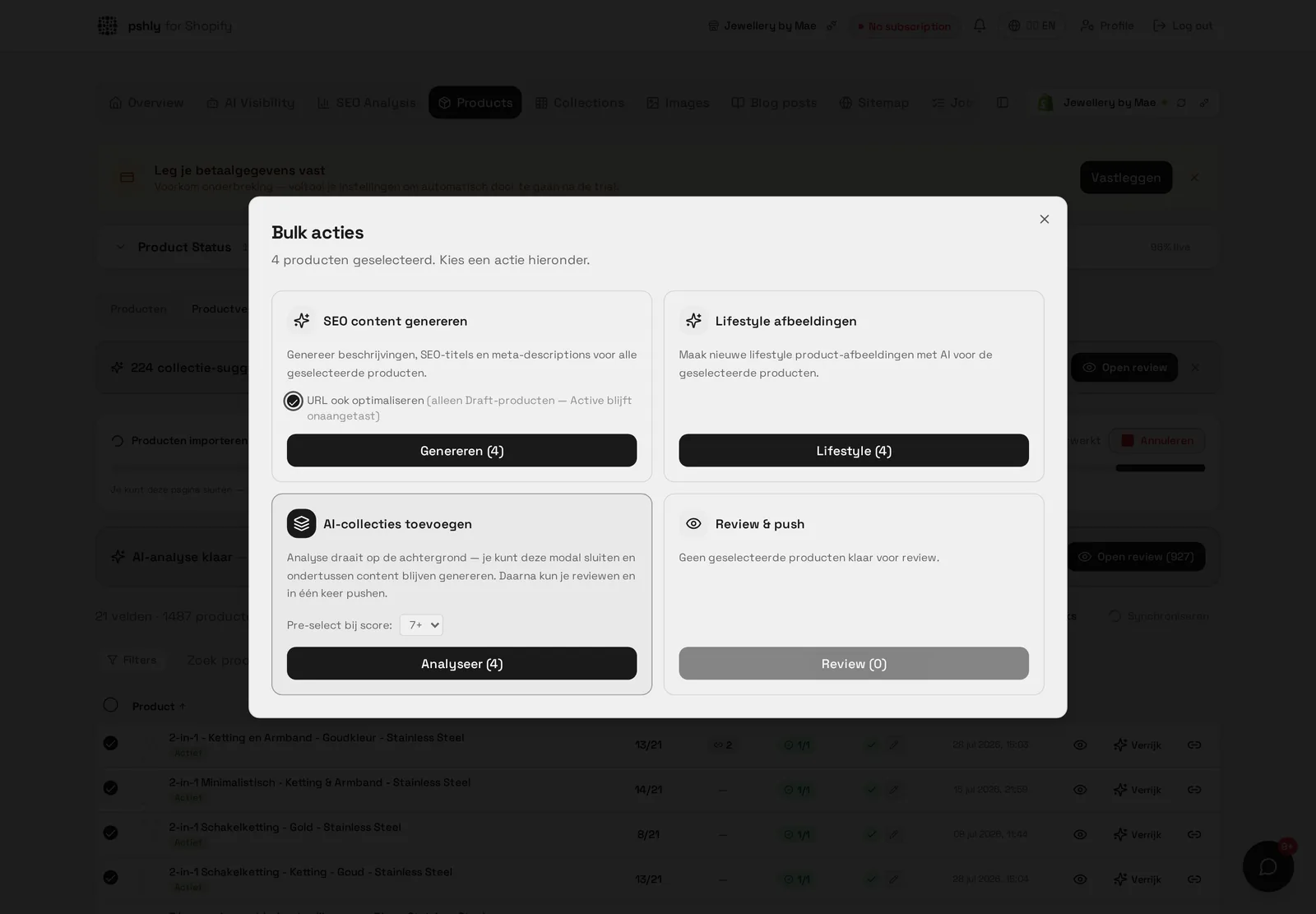
The average Shopify visitor makes a purchase decision within 7 seconds — and visual content plays the leading role. Yet many stores still lean entirely on packshots: the product on a white background, sometimes from two angles. That was the standard ten years ago. Today it's a conversion drag.
Why packshots alone don't cut it anymore
A packshot tells what a product is. A lifestyle scene tells what the product does for the customer. That difference is psychologically enormous. Baymard Institute research shows that product pages with at least four contextual images convert 22% better on average than pages with packshots only.
The reason is simple: visitors project themselves into the scene. If they can imagine the product in their own interior, on their own desk or in their own hands, the purchase threshold drops substantially.
The psychology of product-in-context
Three cognitive mechanisms explain why lifestyle scenes work:
- Social proof — a product in use implies others are already using it
- Usage intent — context makes concrete how and when you'd use the product
- Scale reference — a hand or environment instantly shows real-world size
These aren't marketing tricks — they're fundamental purchase psychology. A mug next to a laptop on a desk demonstrably outsells the same mug floating on white, even though it's the exact same product.
The multi-channel reality
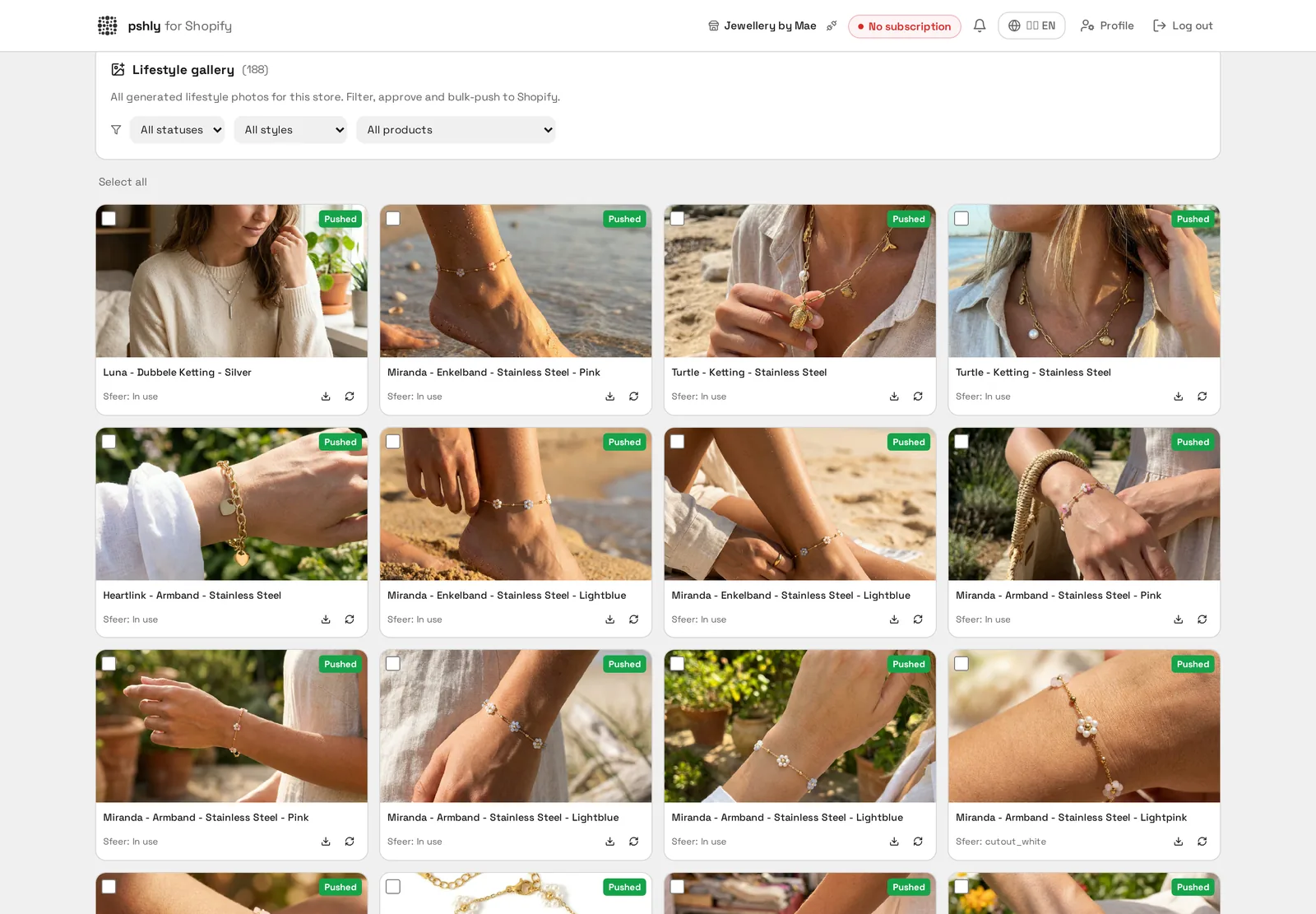
Lifestyle imagery isn't optional anymore if you sell across multiple channels. Instagram, TikTok and Pinterest need context. Marketplaces like Amazon require white as the first image but reward additional lifestyle shots with better visibility. Google Shopping increasingly shows contextual imagery in the carousel.
A solid visual package per product contains: 1 cutout for marketplaces, 1 hero studio shot for the product page, and 3-5 lifestyle variants for different channels and ads.
The cost reality of traditional photography
A professional photoshoot for 50 products averages $3,000-$8,000. For a growing webshop with weekly new products, that's unsustainable. The result: new products go live with only supplier images and stay there for months, with direct consequences for conversion and SEO.
AI changes the economics
With AI-generated lifestyle scenes the cost per image drops from tens of dollars to cents. More importantly: turnaround drops from weeks to minutes. That changes how you think about visual content. No longer a one-time investment, but a continuous process that scales with your catalog.
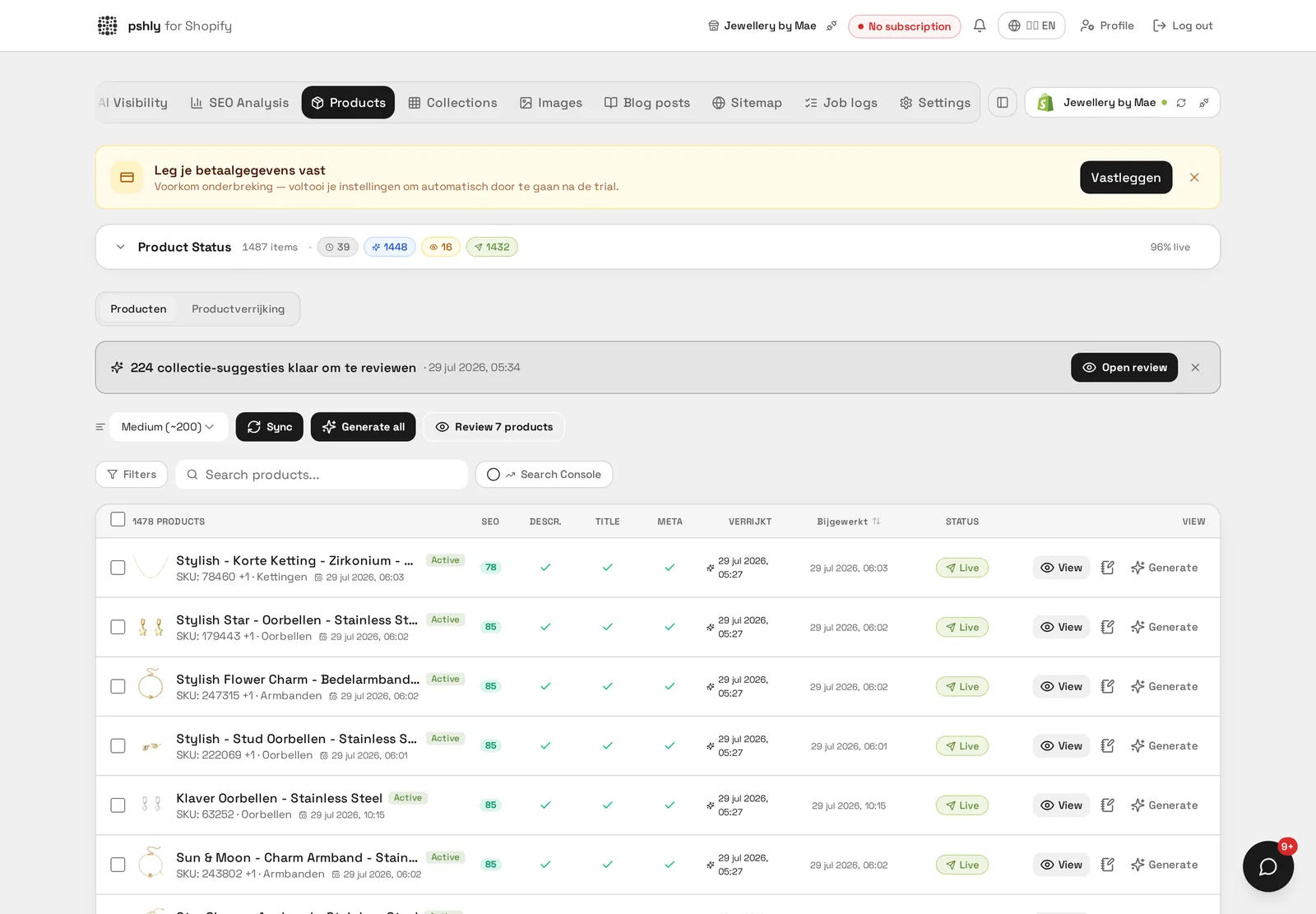
See how the AI product images generator brings this to life for Shopify shops.
Four strategies for maximum conversion
- A/B-test your hero image — replace your first product photo and measure conversion impact within two weeks
- Match scene to audience — a product for young professionals works better in a workspace scene than in a domestic setting
- Refresh seasonally — show products in season-relevant scenes (summer outdoors, winter interiors)
- Repurpose for ads — the same scene works as product photo, social ad and email header
Next step
Start small: pick your ten best-selling products and generate three lifestyle variants per product. Measure conversion before and after. The data will guide you. Start free and upgrade your visual content today.