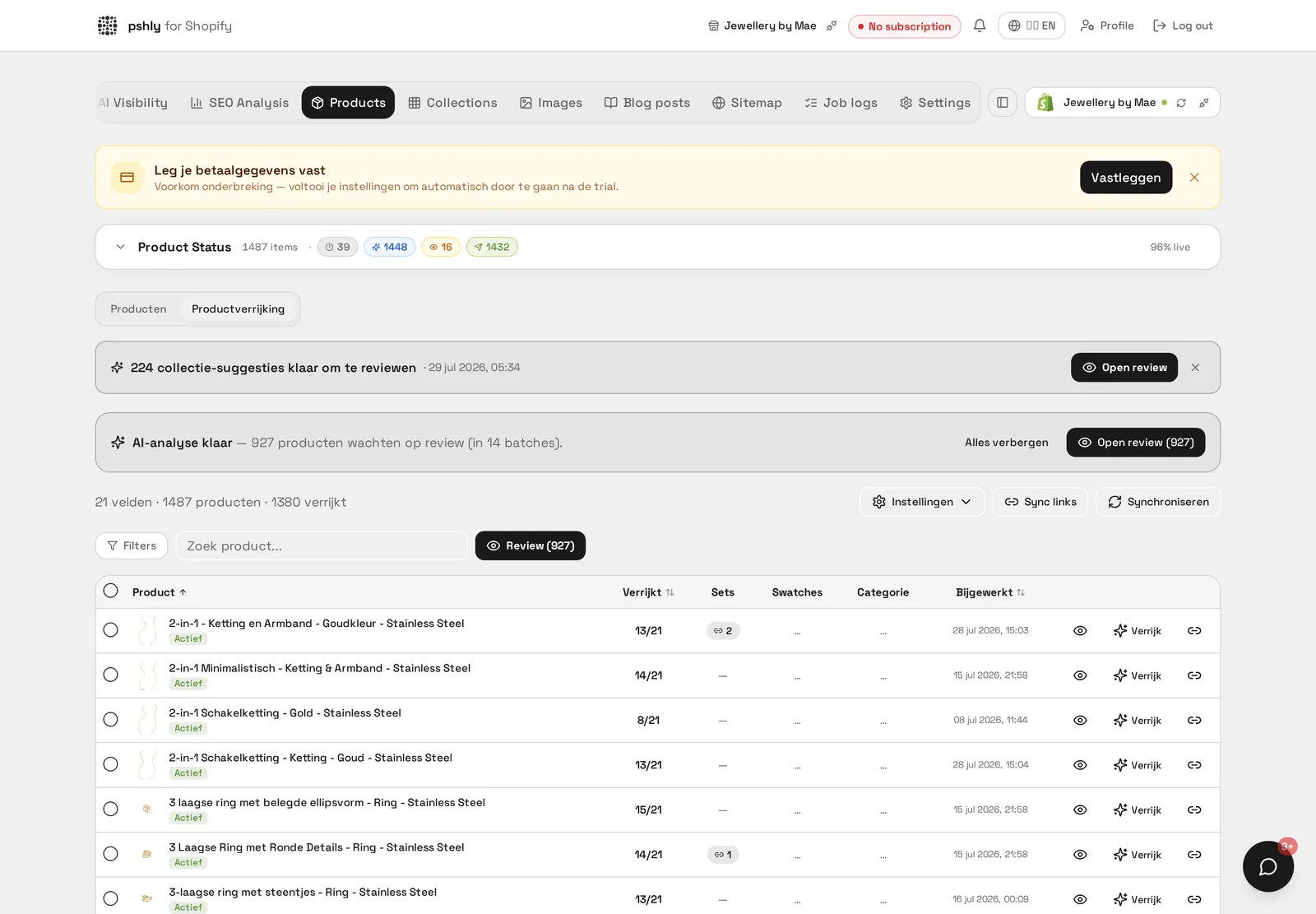
Cleaning up a Shopify catalog of 500 or 5,000 products is one of the dullest, most time-consuming jobs in e-commerce. Yet so much depends on it: empty metafields kill filters, missing color-pattern links break swatches, missing Shopify categories hide the very metafields you just filled, and a careless collection structure buries your best products. The new AI product enrichment in Pshly.ai tackles all four in a single workflow.
1. AI metafield enrichment from text and images
The AI reads title, description, variants and tags to determine color, material, season, style, shape, weight and dimensions. Got an imported catalog with thin or missing copy? Vision mode kicks in: the AI looks at your product photo and extracts color, material and style directly from the image. No more empty descriptions blocking your enrichment.
You decide which metafield definitions to fill. Pshly ships 13 defaults but you can also import existing Shopify definitions or create your own. For a select field the AI picks from your options, for a number field it returns a value with the right unit.
2. Automatic Shopify product category
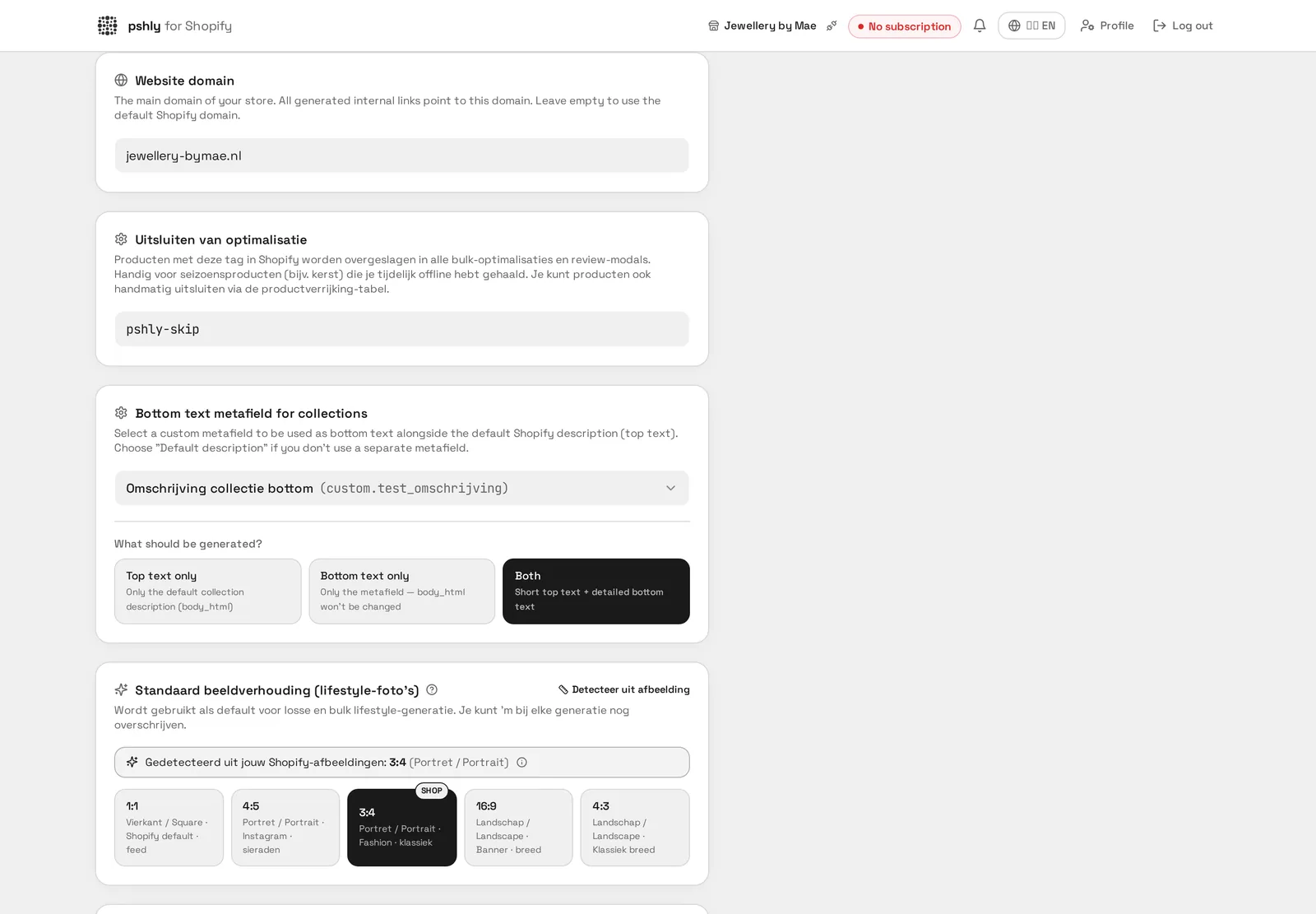
The official Shopify taxonomy has thousands of leaf categories. Finding the right one by hand is painful — and without a category most Shopify metafields (including color and material) don't even render in your theme. The AI suggests the most specific leaf category based on title, type and product image. One click and it's applied; you can also search manually in the same modal.
3. Color swatches that actually work
Shopify swatches only render when the variant option is linked to the official shopify.color-pattern metaobject AND the product has a category. Pshly checks both conditions, links values like 'Gold colour' to the Gold entry of the metaobject and activates swatches in a single pass. The result: clean gold/silver buttons on product pages and filterable swatches on collection pages.
4. Collection analysis for large catalogs
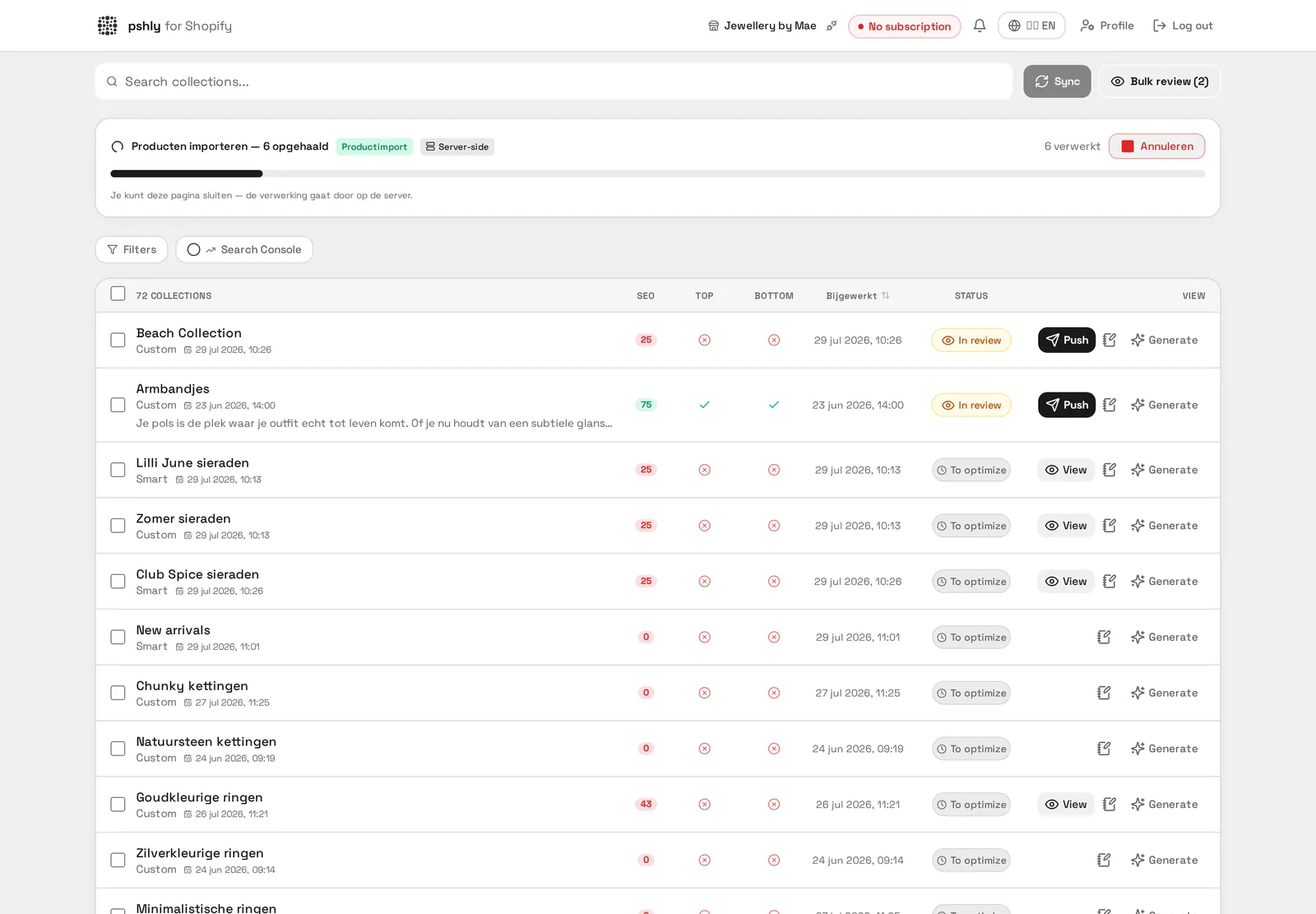
This is the feature that changes everything once your catalog crosses 200 products. The collection analysis evaluates each item's title, tags, type, metafields and images and compares it to your existing collections (manual and smart). Per product you see a list of suggested collections with confidence score and assign them in bulk or one by one.
Practical example: you import 300 new pieces of jewelry. With the collection analysis every item lands in the right 'Earrings', 'Gold', 'Gifts under €50' and 'New in' collections within 10 minutes — no manual ticking 300 times. And the 'Not yet analysed' filter keeps you from ever re-processing products already enriched.
The 5-step workflow
- Pick which metafield definitions to fill.
- Select products and run AI enrichment (text + vision).
- Link variant options to Shopify's color-pattern metaobjects.
- Apply missing product categories from the official taxonomy.
- Run the collection analysis and bulk push everything back to Shopify.
What you gain
- Working swatches and filters on product and collection pages — instant on-site conversion lift.
- Complete Shopify categories that also strengthen your Google Shopping feed and structured data.
- Products in the right collections, so better internal linking and up-sell.
- A working week of manual labour replaced by an afternoon of review-and-push.
See the AI Product Enrichment feature for live examples or start free and enrich your first 50 products in 10 minutes.