When SEO specialists talk about link building, it's usually about external links. But there's a much simpler, fully controllable strategy that's equally powerful: internal links. And most Shopify stores barely use them.
Why internal links matter
- Crawlability: They help Google discover and index all pages in your store
- Link equity: They distribute authority from your strongest pages to deeper pages
- User experience: They help visitors find related products and information
A well-linked product page can rank 2-3 positions higher than an isolated page with the same content.
The ideal internal link structure for Shopify
- Layer 1 (Homepage): Links to all main collections
- Layer 2 (Collections): Link to subcollections and top products
- Layer 3 (Products): Link to related products and parent collection
- Cross-links: Blog articles link to products and collections, and vice versa
Every page should be reachable within 3 clicks from the homepage.
Contextual vs. navigational links
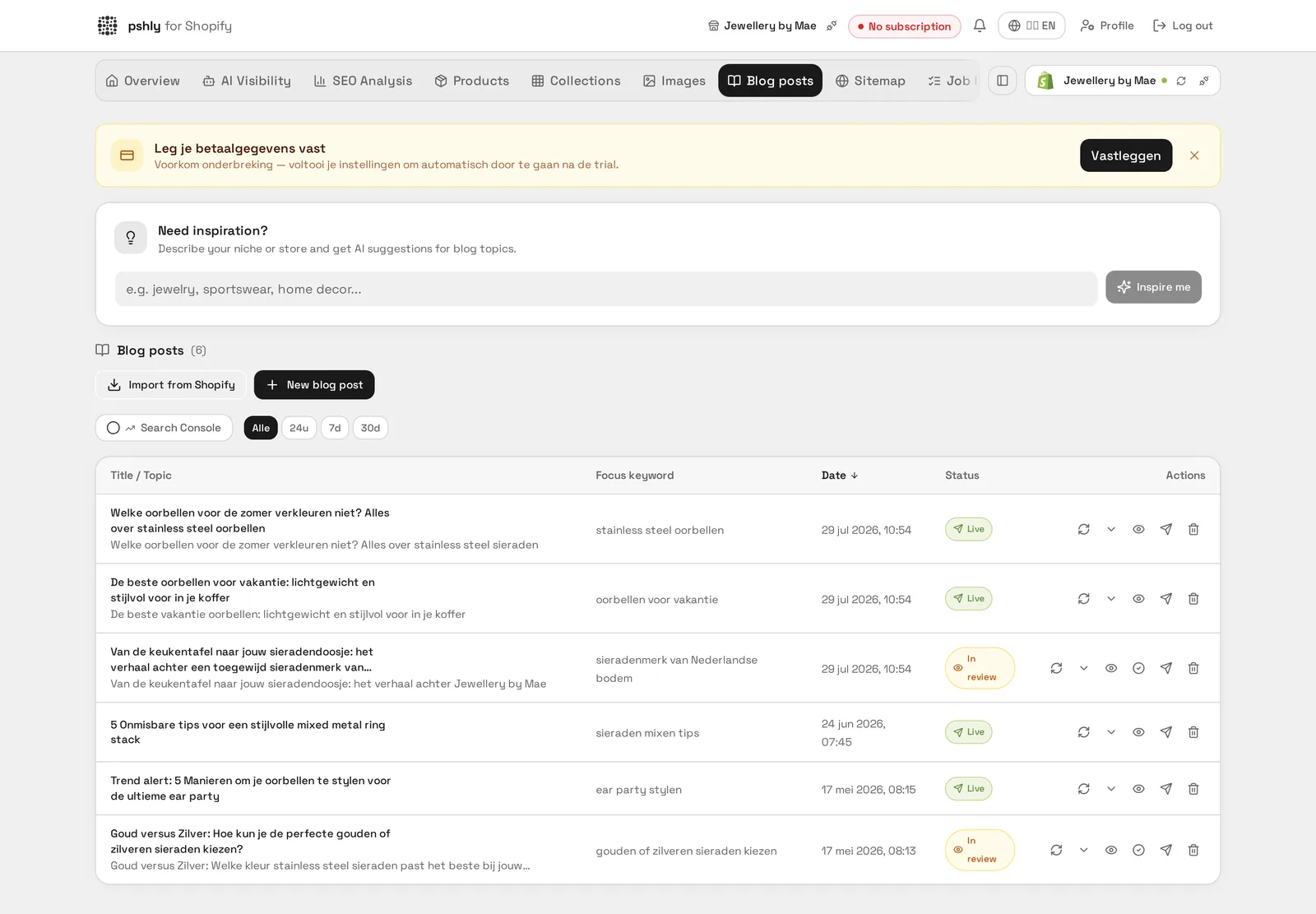
Navigational links (menu, footer, breadcrumbs) carry less SEO weight — they appear on every page. Contextual links within product descriptions, collection texts, and blog articles carry much more value because they exist in relevant context.
Anchor text best practices
- Descriptive: "view our running shoes collection" instead of "click here"
- Varied: Don't always use the exact same anchor text
- Relevant: The anchor text should logically match the destination page
- Not over-optimized: Avoid always using your exact keyword as anchor
Common internal linking mistakes
- Orphan pages: Pages not linked to by any other page
- Too-deep structure: Products more than 4 clicks from the homepage
- Broken internal links: Links to deleted or moved pages
- No contextual links: Only navigation links without in-content links
- Uneven distribution: All links pointing to the same 5 pages
Internal links in product descriptions
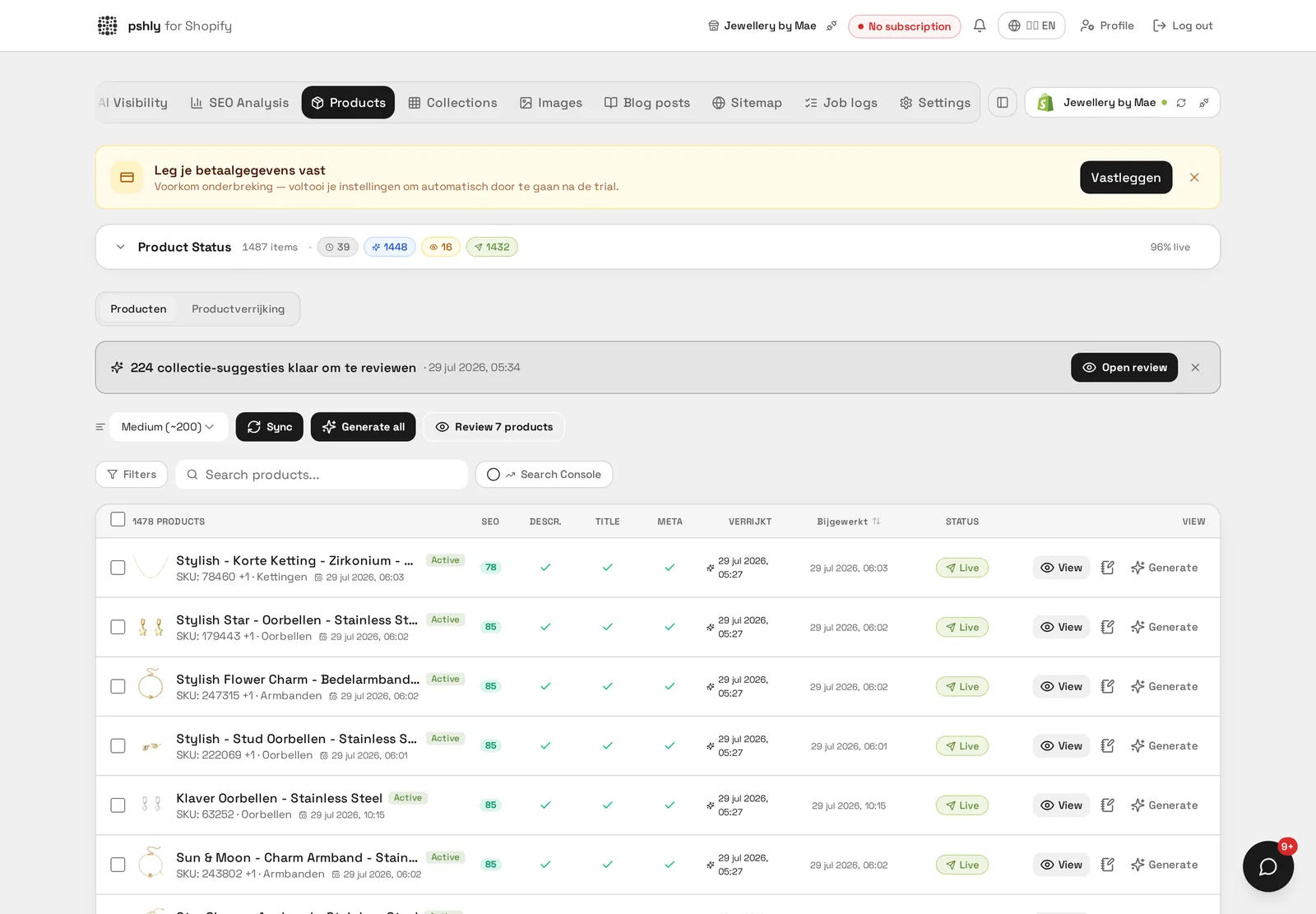
The most effective place for internal links is the product description. Per product, include 2-4 links to the parent collection, complementary products, and relevant blog articles.
Measure the impact
After implementing an internal link strategy, measure via Search Console: more indexed pages, higher average positions, more impressions on long-tail keywords, and higher CTR.
Start free and discover internal link opportunities in your store. Or book a demo.