SEO for Shopify is constantly evolving. What worked in 2024 is no longer sufficient in 2026. AI-powered search results, Core Web Vitals, and the growing influence of AI Visibility require a broader approach. This checklist ensures you don't miss anything.
Technical SEO: the foundation
Without a solid technical foundation, all content optimization is futile:
- SSL certificate — Shopify handles this by default, but verify all internal links point to HTTPS
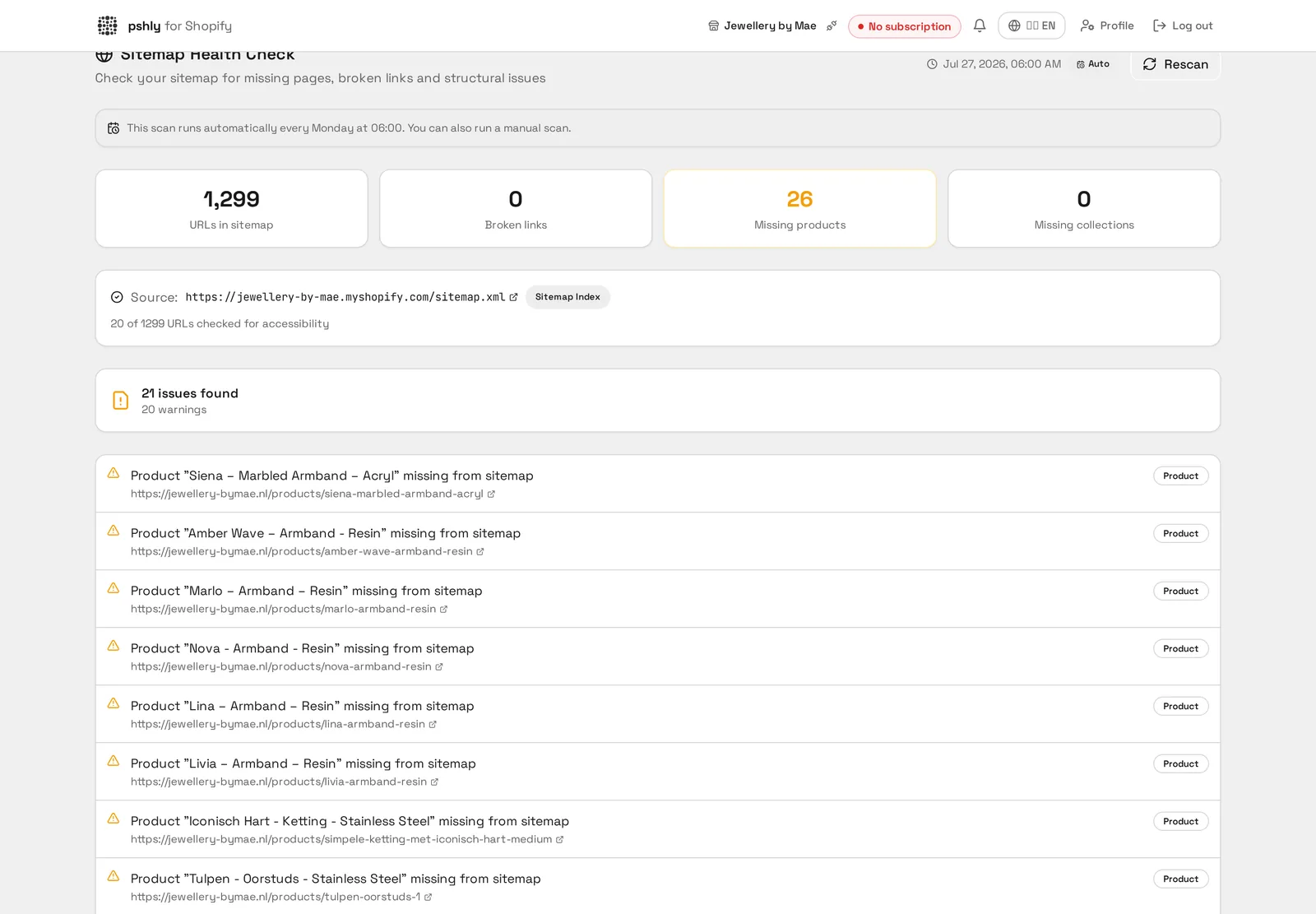
- Sitemap.xml — Regularly check with a Sitemap Health Check that all pages are included
- Robots.txt — Don't block important pages from crawlers
- Canonical tags — Prevent duplicate content on filtered and paginated collection pages
- Core Web Vitals — LCP under 2.5s, FID under 100ms, CLS under 0.1
- Mobile-first — Google primarily indexes the mobile version of your site
- Structured data — Product, BreadcrumbList, and FAQ Schema.org markup on relevant pages
On-page SEO: content that ranks
Every page in your Shopify store is an opportunity to rank:
- Title tags — Unique per page, max 60 characters, primary keyword first
- Meta descriptions — Max 160 characters, with USP and call-to-action
- H1 tag — One per page, containing the primary keyword
- Subheadings (H2/H3) — At least 3 per product page with keyword variations
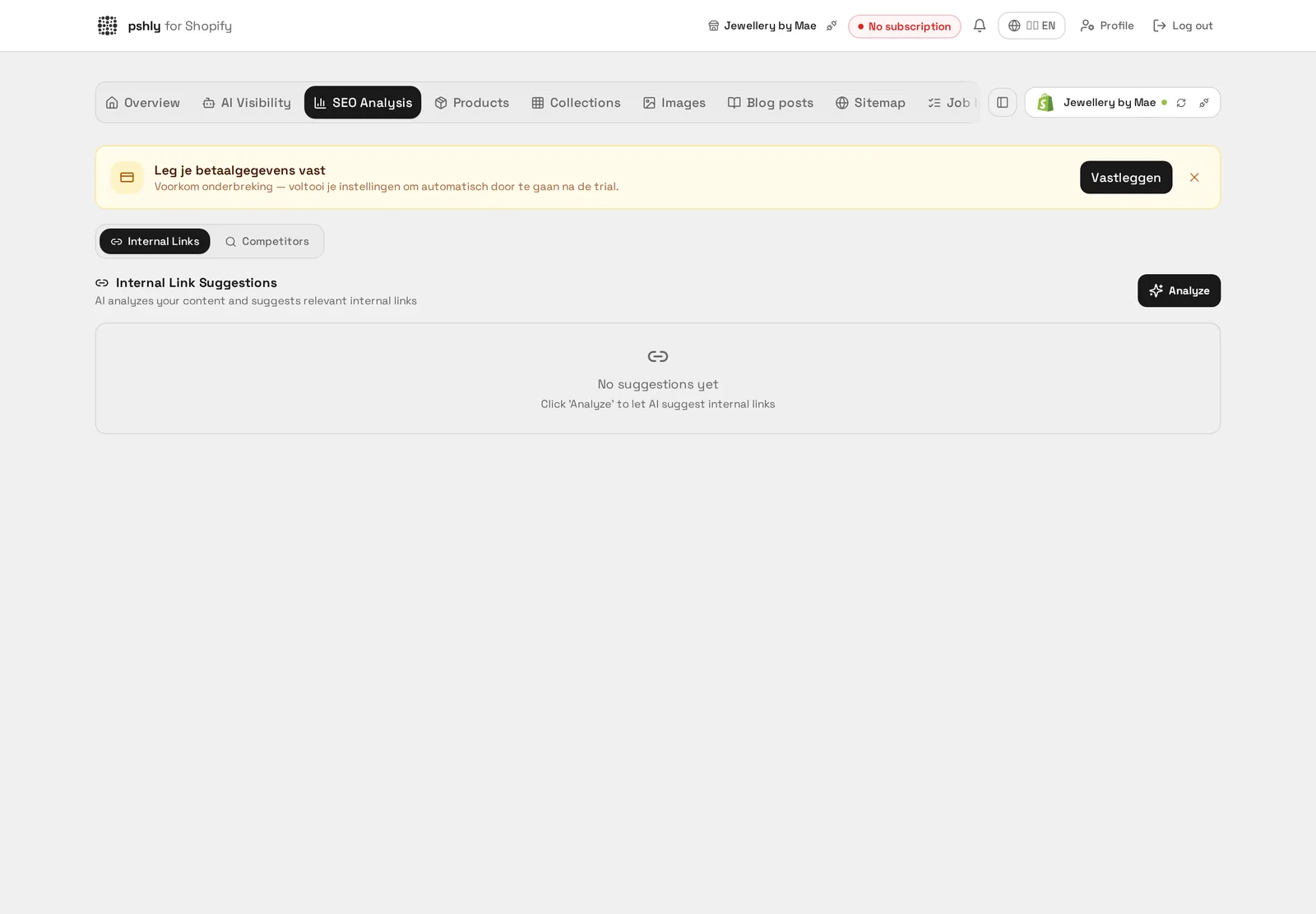
- Internal links — 2-4 relevant links per page to related products and collections
- Alt tags — Descriptive alt tags on all images
Optimizing product pages
Product pages are often the highest-converting pages. Yet most Shopify stores barely optimize their product descriptions.
Checklist per product:
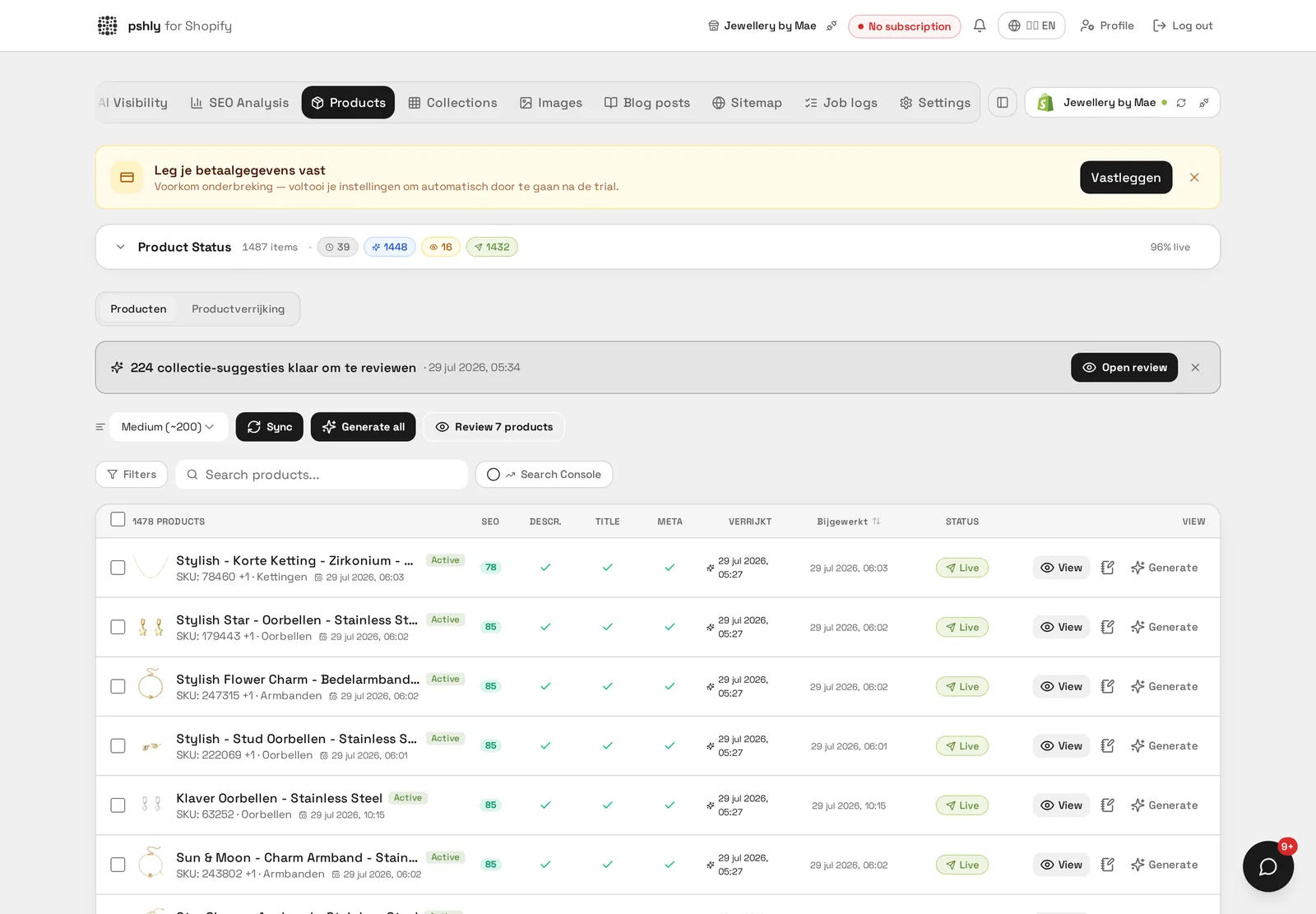
- Unique description of at least 300 words
- Variant information woven into the text (colors, sizes, materials)
- At least 3 product images with descriptive alt tags
- Product Schema.org markup with price, availability, and reviews
- Internal links to the parent collection and related products
- SEO title and meta description optimized for search intent
Collection pages: the underestimated SEO opportunity
Collection pages often rank for broader keywords with higher search volume than individual products. Yet most Shopify stores have collection pages without any text content.
Content gap analysis
A content gap analysis reveals keywords where you get impressions but no clicks — or terms your competitors rank for but you don't. Focus on terms at positions 5-20 with commercial intent.
AI Visibility: the new dimension
In 2026, AI search engines like Google AI Overviews, ChatGPT, and Perplexity increasingly provide direct answers. To be visible, your content needs structured data, depth, and regular updates. Measure your AI Visibility score to see where you stand.
Blog content as an SEO engine
A blog helps you rank on informational queries, build topical authority, create internal links, and win featured snippets. Scale this with AI-generated blog posts.
Monitoring and adjustment
SEO is not a one-time activity. Set up a monthly routine: check Search Console data, run SEO analyses, update declining pages, and monitor AI Visibility trends.
Start free and work through this checklist for your store. Or book a demo.