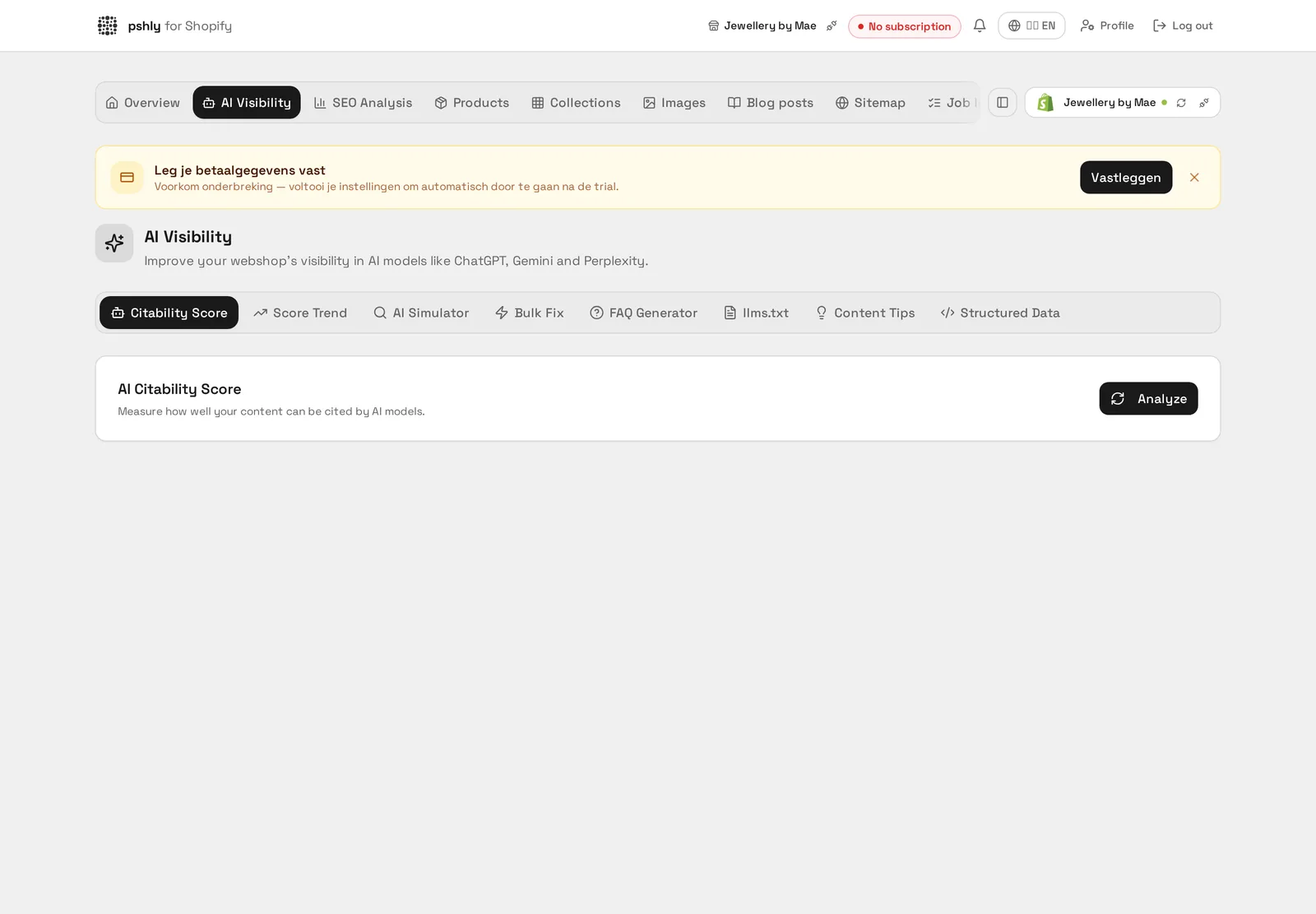
The way consumers search for information is changing fundamentally. Instead of a list of blue links, they increasingly get AI-composed answers. The question is: is your store mentioned in that answer? In this comprehensive article, we explain what AI Visibility is, how it differs from traditional SEO, and how to prepare your store.
The shift to AI-powered search
In 2025-2026, we're seeing a fundamental shift in search behavior:
- Google AI Overviews: Google increasingly shows AI-generated summaries above organic results
- ChatGPT: Over 200 million weekly users, many using it as a search engine
- Perplexity: The fastest-growing AI search engine with source attribution
- Bing Copilot: Microsoft's AI search experience reaches hundreds of millions of Edge users
For e-commerce, this means your content must not only rank in traditional search results but also be picked up by AI systems composing answers.
What is AI Visibility?
AI Visibility measures how well your content performs in AI-powered search environments. It's a score indicating to what extent your content has the properties AI systems value when selecting sources.
The six factors of AI Visibility
Based on our analysis of thousands of products, we identify six core factors:
1. Structured data (Schema.org)
AI systems love structured information. Product Schema markup with price, availability, reviews, and specifications gives AI the context it needs to present your products correctly.
2. FAQ sections
FAQ sections are gold for AI Visibility. AI search engines cite FAQ answers disproportionately often. Add 3-5 relevant questions and answers to every product page.
3. Unique, in-depth content
AI systems prefer sources that provide unique information. Product descriptions that go beyond basic specifications — usage tips, comparisons, care instructions — are cited more often.
4. Trust signals
Authorship, company information, reviews, and certifications strengthen your trustworthiness in the eyes of AI systems. This aligns with Google's E-E-A-T guidelines (Experience, Expertise, Authoritativeness, Trustworthiness).
5. Content structure and readability
Well-structured content with clear headings, bullet points, and paragraphs is easier for AI systems to process. This applies to both your collection pages and product pages.
6. Contextual relevance
Content that fits within a broader semantic network — through internal links, related content, and topical clusters — scores higher. AI systems understand context and prefer websites that write extensively about a topic.
How AI Visibility differs from traditional SEO
AI search engines select content based on different criteria:
- Backlinks: Less important — AI looks more at content quality than link profiles
- Keyword density: Irrelevant — AI understands semantic meaning, not exact keywords
- Page speed: Not directly influential — AI reads your content, not your load time
- Content depth: Much more important — superficial content is rarely cited
- Structured data: Much more important — AI needs structure to extract information correctly
Practical steps to improve your score
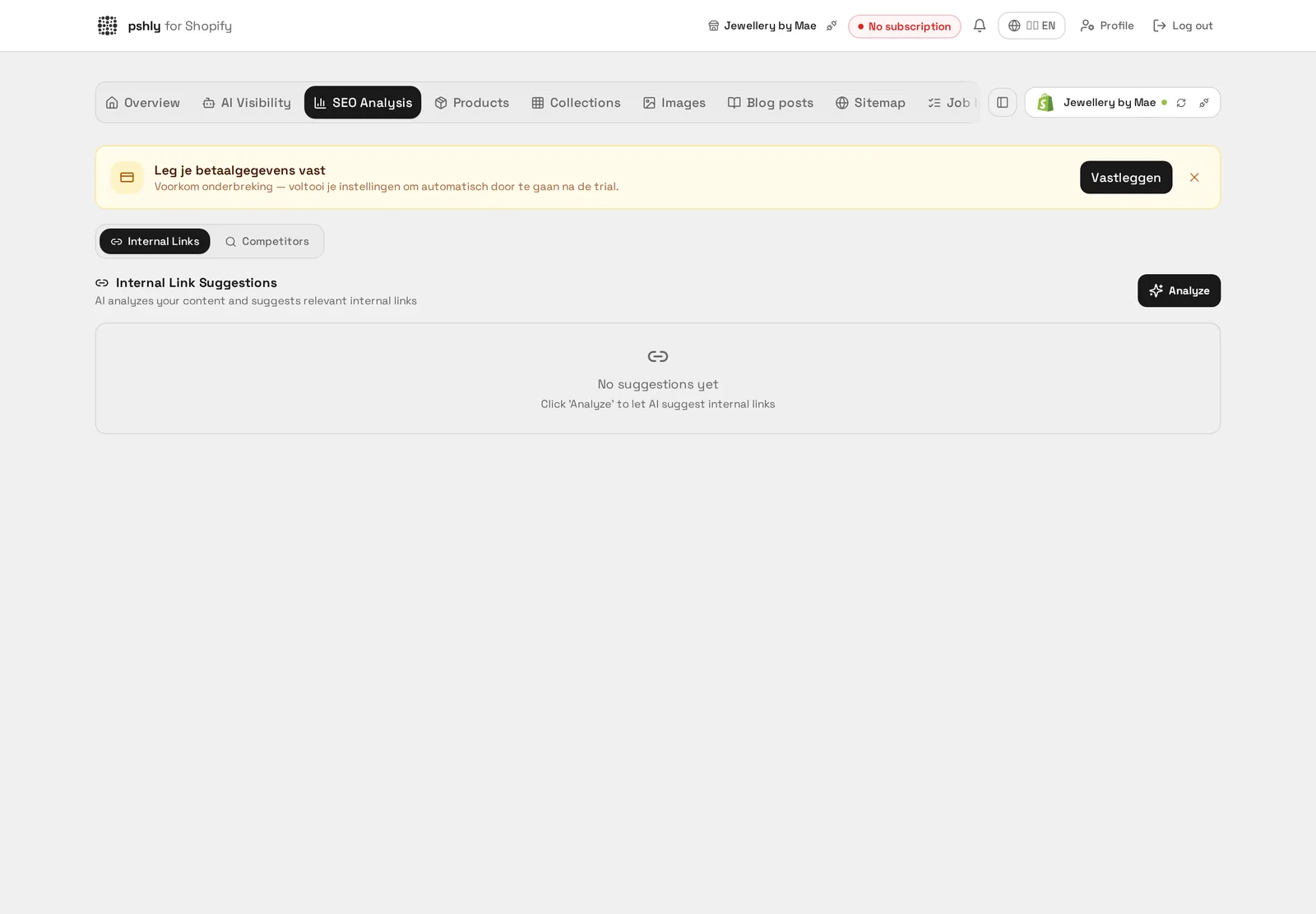
- Run an SEO analysis on your product pages to see which factors need improvement
- Add Schema.org Product markup to all your products
- Write FAQ sections for your top 50 products
- Enrich your product descriptions with unique, informative content
- Optimize your alt tags — AI also uses visual context
- Build internal link structures between related products and collections
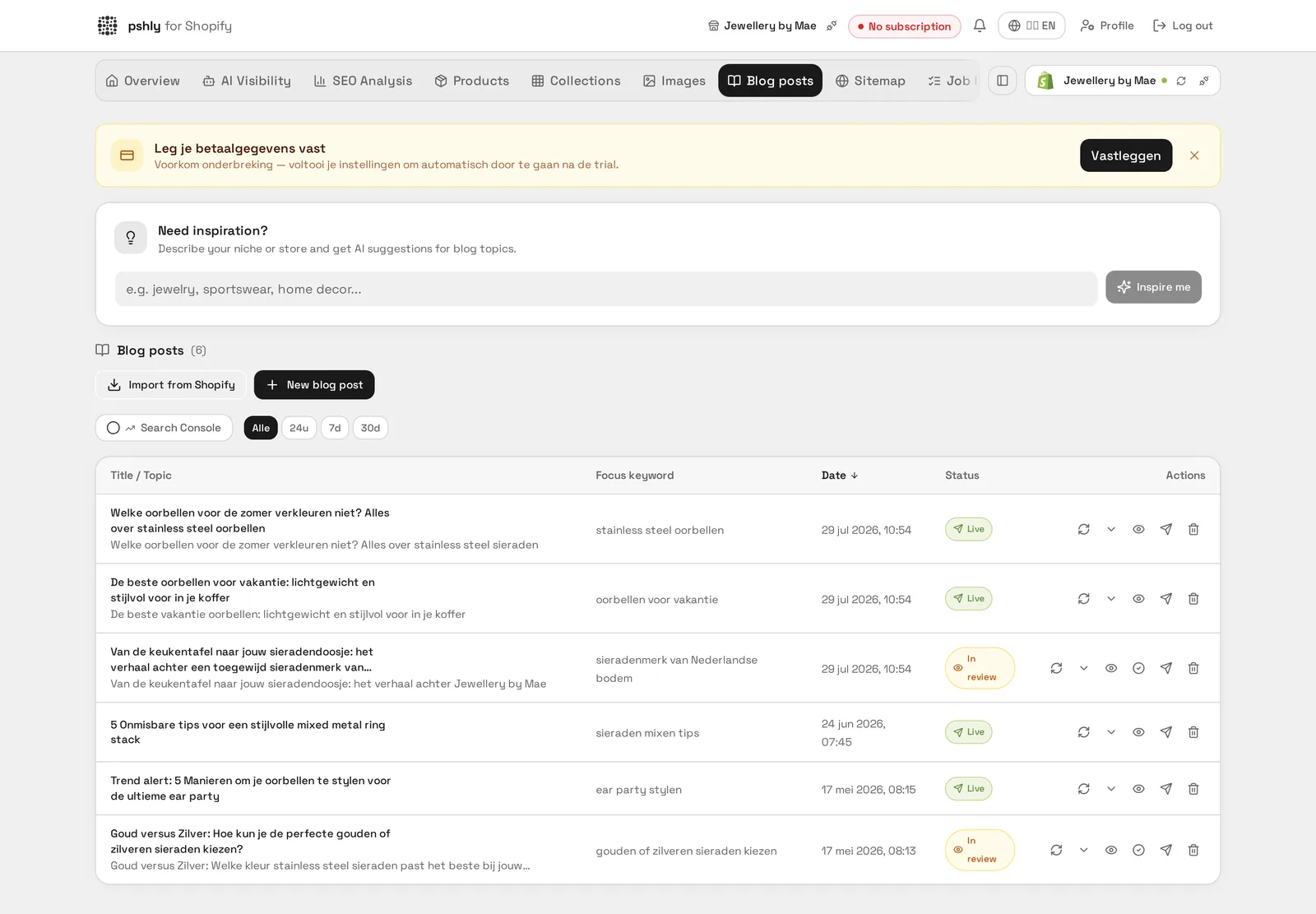
- Publish regular blog content about your product categories
The future of search is hybrid
Traditional SEO isn't going away — but it's being supplemented with AI-powered search. The stores investing in AI Visibility now are building an advantage that's hard to catch up to. Just as the first stores that took SEO seriously in 2010 built an enormous advantage, the early adopters of AI Visibility optimization will be tomorrow's winners.
Measure your current score
With an AI Visibility score per product and collection, you see at a glance where the opportunities lie. Bulk-fix functionality helps you quickly implement improvements across your entire catalog.
Book a free demo and discover your current AI Visibility score. Or start free and begin optimizing today.