Recent years saw a proliferation of AI tools: one for product copy, one for images, one for SEO audits, one for schema markup. The result: ten tools, ten dashboards, ten invoices — and still content that doesn't hang together. In 2026 the winning strategy is the opposite: one integrated content stack where each layer reinforces the next.
Why standalone tools no longer suffice
A product page isn't a collection of separate parts. Text, images, metadata and structured data must tell the same story. When your copy mentions "ergonomic handle" but your alt tags only say "coffee pot", you lose SEO signal. When you show a new lifestyle scene in an interior but your product description only covers technical specs, you miss the conversion opportunity.
The five layers of a modern content stack
- Product copy — descriptions, USPs, FAQ sections based on product and search data
- Visual content — packshots, lifestyle scenes and cutouts in one pipeline
- Metadata — alt tags, meta titles and descriptions optimized per page
- Structured data — Product, Breadcrumb, Review and FAQ schema for rich results
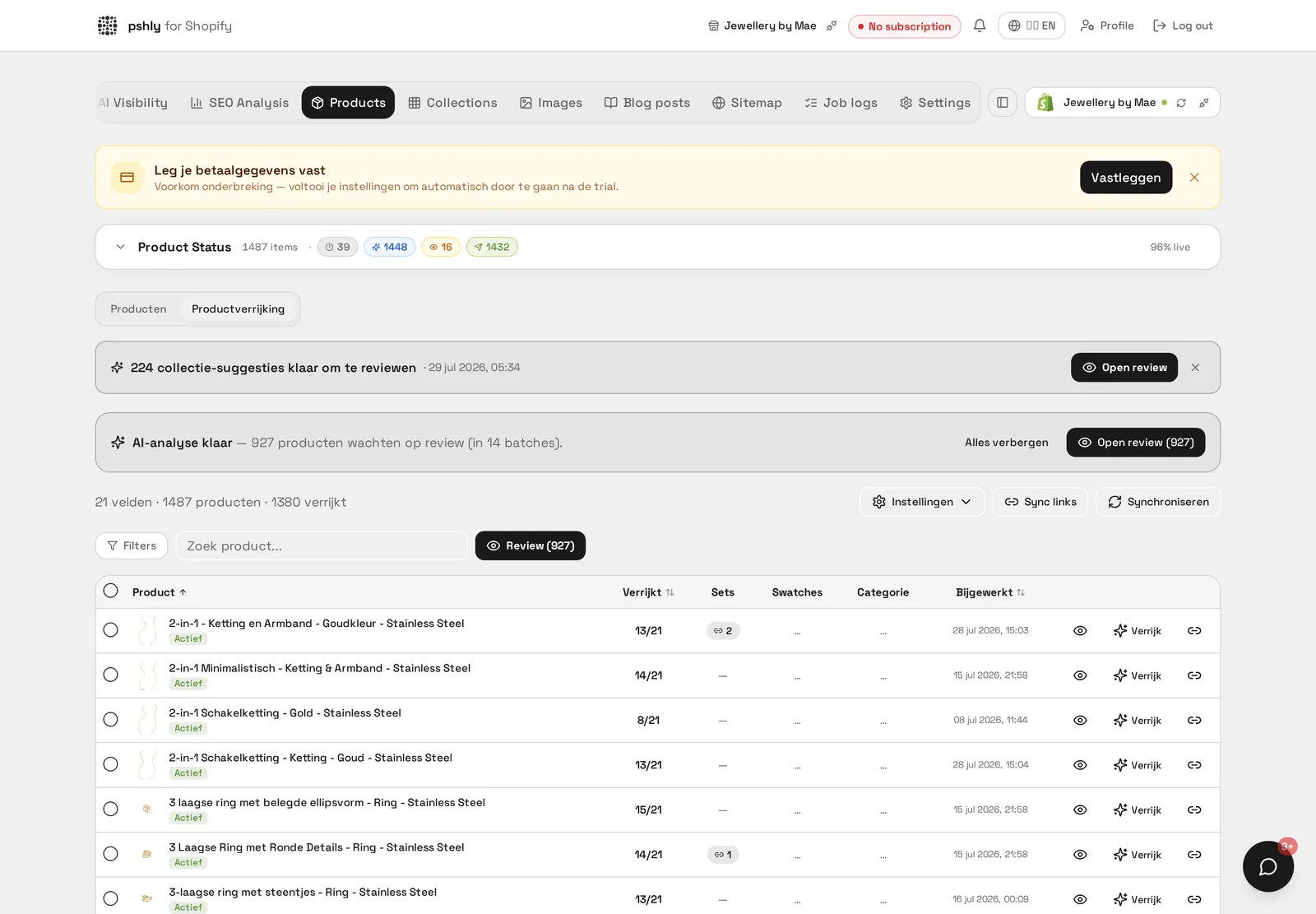
- Internal links — automatic suggestions based on product relations and category overlap
The magic is in the coupling: the same product data feeds all five layers, creating consistent brand image and consistent SEO signaling.
Search Console as feedback loop
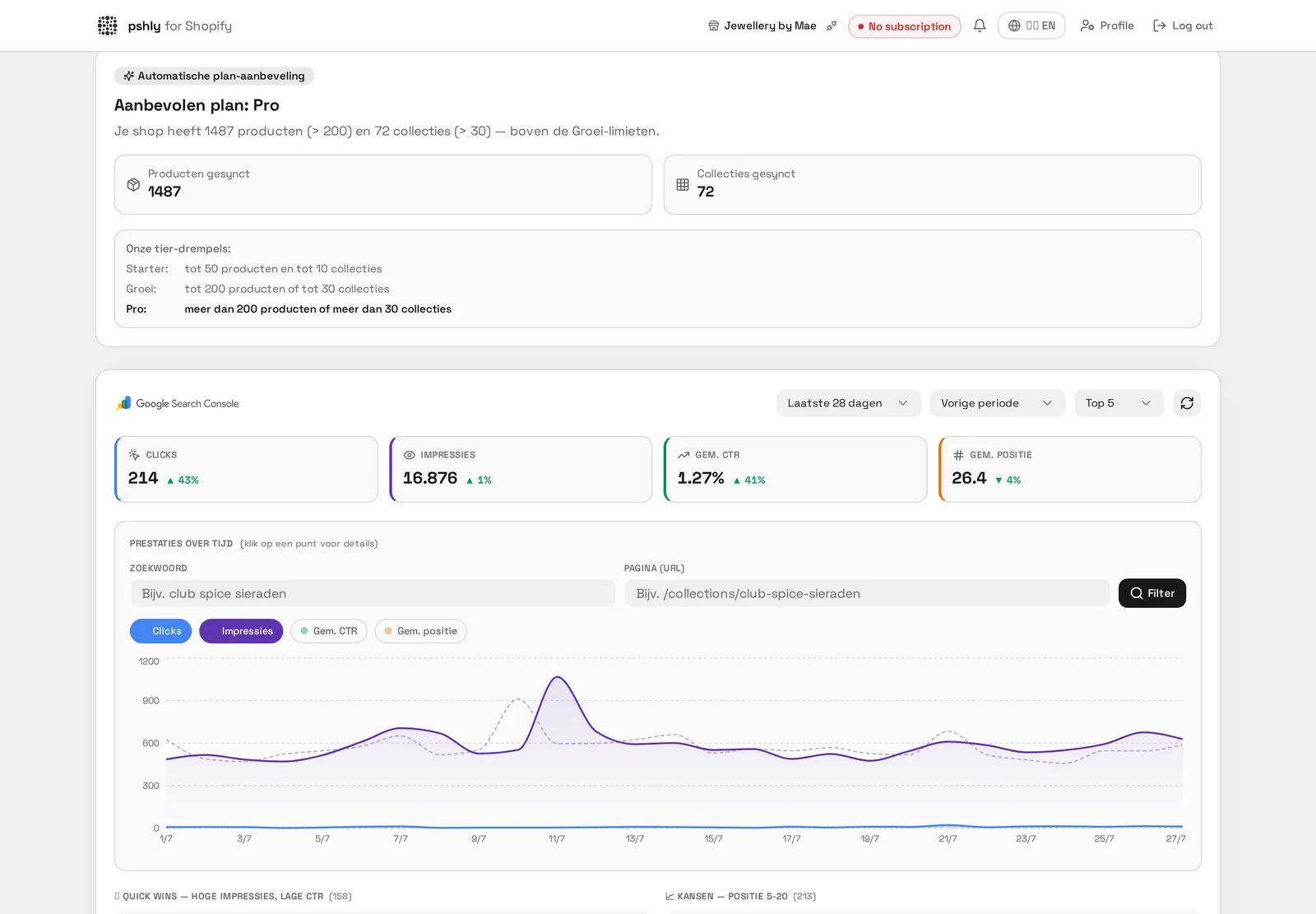
A stack without feedback is shooting in the dark. Connecting Google Search Console gives the system insight into which queries actually drive traffic, which pages are dropping, and where content gaps exist. That data feeds back into new content generation. That's the difference between writing once and continuously optimizing.
The rise of AI Visibility
Until 2024, Google was the only search engine that really mattered. Today your content also gets reach via ChatGPT, Perplexity, Claude and Google AI Overviews. These AI search environments work differently: they cite sources, summarize and choose based on structure and authority. AI Visibility isn't a marketing buzzword — it's a measurable layer to optimize on.
Concretely: clear H2 structure, FAQ sections with direct question-answer pairs, cited sources where relevant, and rich structured data so AI models can correctly interpret your product.
Multimodal search results
Google Lens, visual search and AI Overviews with images change how people discover products. This makes visual content as important as text. A stack producing text and images separately loses substantial traffic here. A stack where both are generated from the same product context gains market share instead.

What's coming in two years
Three developments are already taking shape:
- Video as product content — short clips of products in use becoming as standard as product photos
- Voice commerce — product data must be readable for voice assistants, not just crawlers
- Page-level personalization — content that adapts to origin, language and prior behavior
A good stack built today supports these expansions tomorrow without rebuilding.
How to start
Don't try everything at once. Start with the two layers where you have the biggest gap today — usually product copy and visual content. Build out from there with alt tags, structured data and internal links. Each layer makes the next easier because product data and context are already shared.
Get started
Pshly.ai bundles these five layers into one integrated platform for Shopify. Start free or book a demo to see how a complete stack can transform your shop.