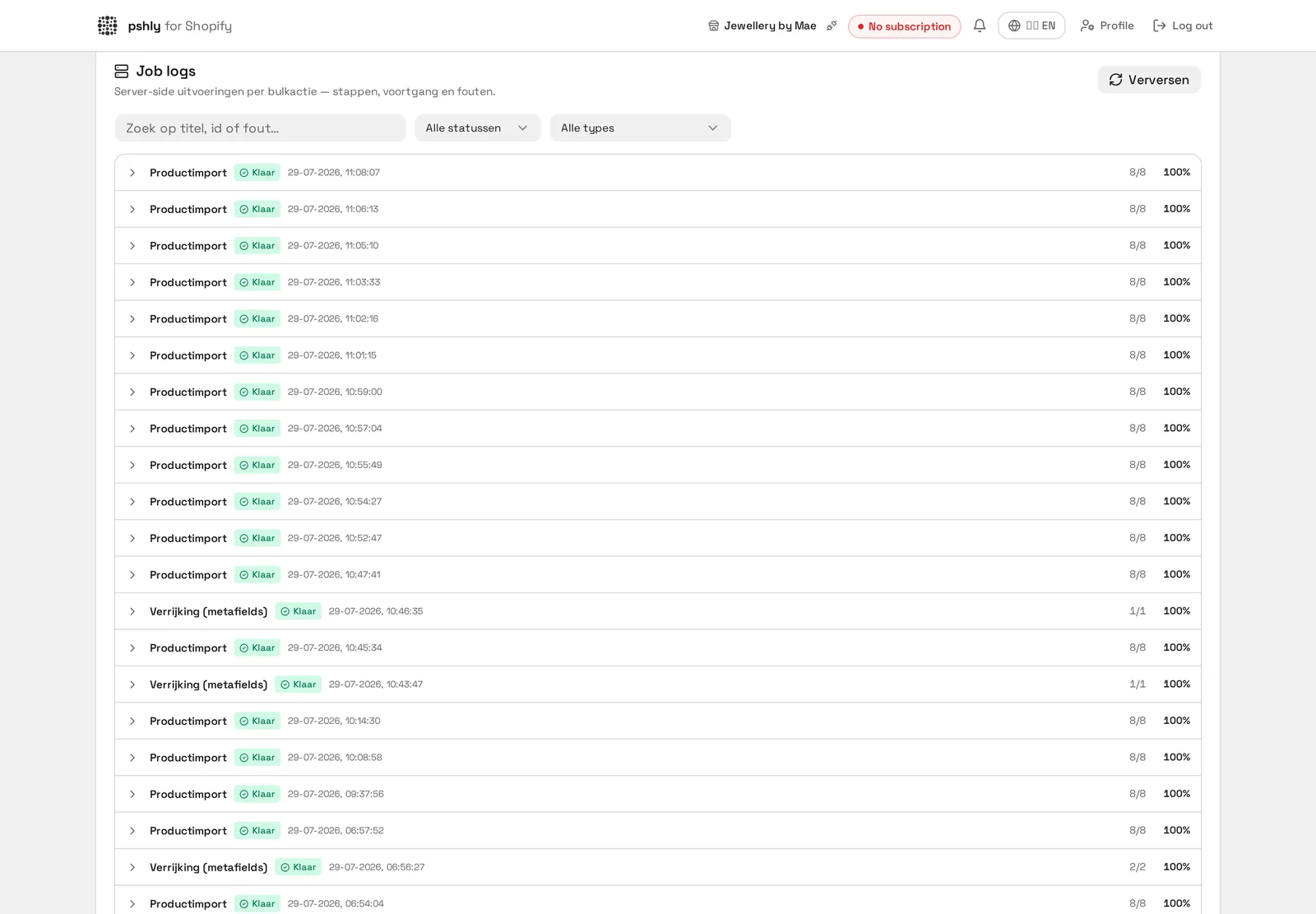
A common challenge for growing Shopify stores: the product catalog grows faster than the team that needs to keep up with content. The result? Half-empty product pages, missing collection descriptions, and a blog that's been silent for months. In this article, we discuss how to solve this with a scalable content strategy.
The scalability problem in numbers
Let's do the math:
- Writing a good product description takes 20-30 minutes
- With 500 products, that's 165-250 hours — more than a month of full-time work
- Add to that: alt tags, meta descriptions, collection pages, blog posts
- And don't forget maintenance: content ages and needs regular updates
At 50 products, it's manageable. At 500, it becomes a full-time job. And at 5,000 products, you need an entire content team — or a smarter approach.
The cost of poor content
It's tempting to postpone content, but the cost of poor or missing content is high:
- Lower rankings: Google ranks pages with 'thin content' lower
- Lower conversion: Visitors who don't find enough information won't buy
- Higher return rate: Customers who don't know what they're buying return more often
- Missed long-tail traffic: Without optimized content, you miss thousands of niche search terms
The three options for scalability
Option 1: Build a content team
A full-time content writer costs $40,000-60,000 per year. With 1,000+ products, you need at least two. This is the most expensive option and scales linearly — more content always means more people.
Option 2: Freelancers and agencies
Freelance copywriters cost $0.10-0.30 per word. An average product description of 300 words costs $30-90. For 500 products: $15,000-45,000. Plus: inconsistent quality and no integration with your Shopify store.
Option 3: AI + data (the smarter approach)
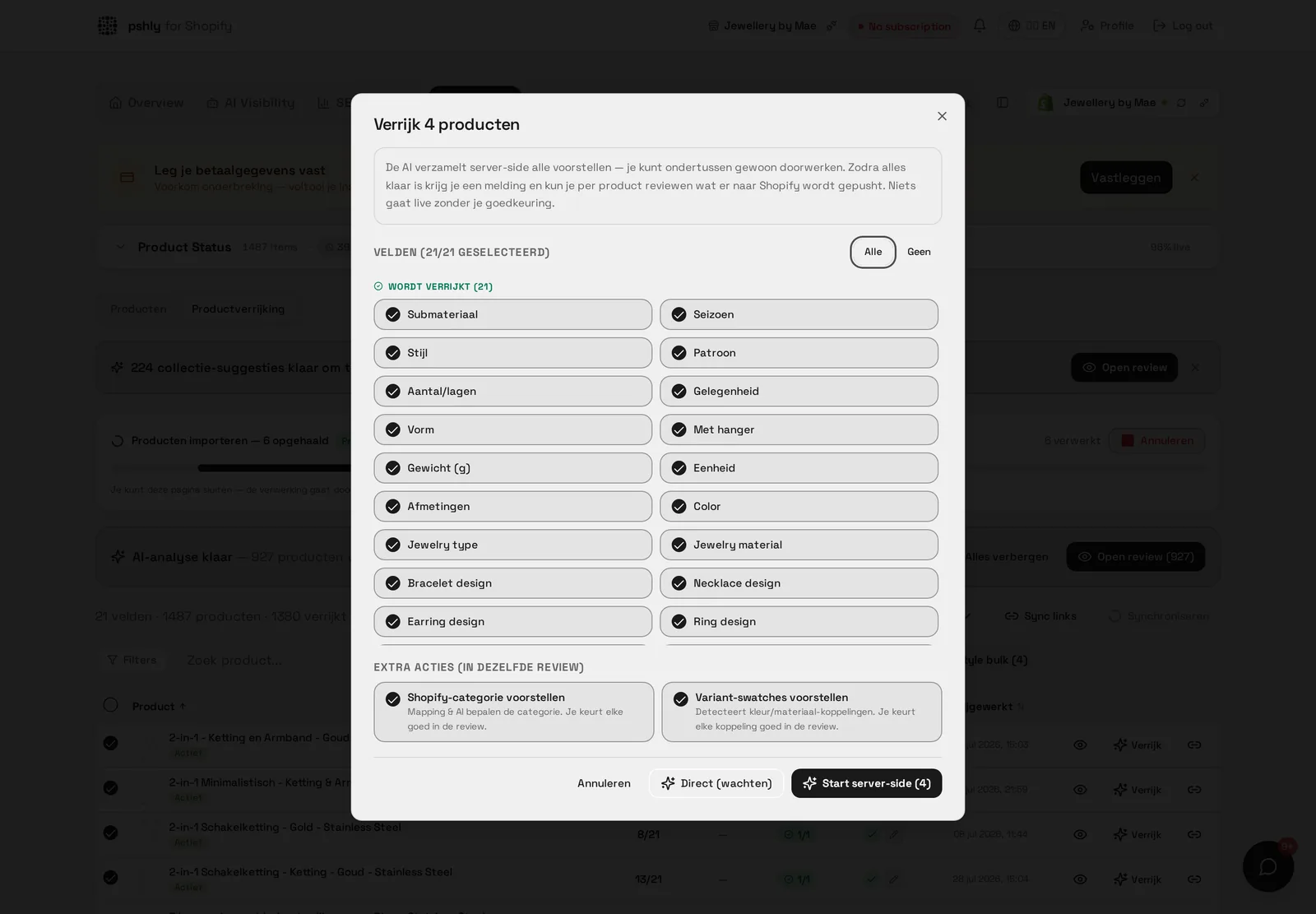
By combining AI content generation with real search data from Google Search Console and an SEO analysis per page, you create a system that scales with your store — at a fraction of the cost.
What a scalable content strategy looks like
- Lay the foundation: Configure your brand voice, writing style, and content language
- Import products: Bring in your full catalog including variants and images
- Bulk generate: Generate product descriptions, SEO metadata, and alt tags in one go
- Review and refine: Check generated content and adjust where needed
- Publish: Push everything directly to Shopify
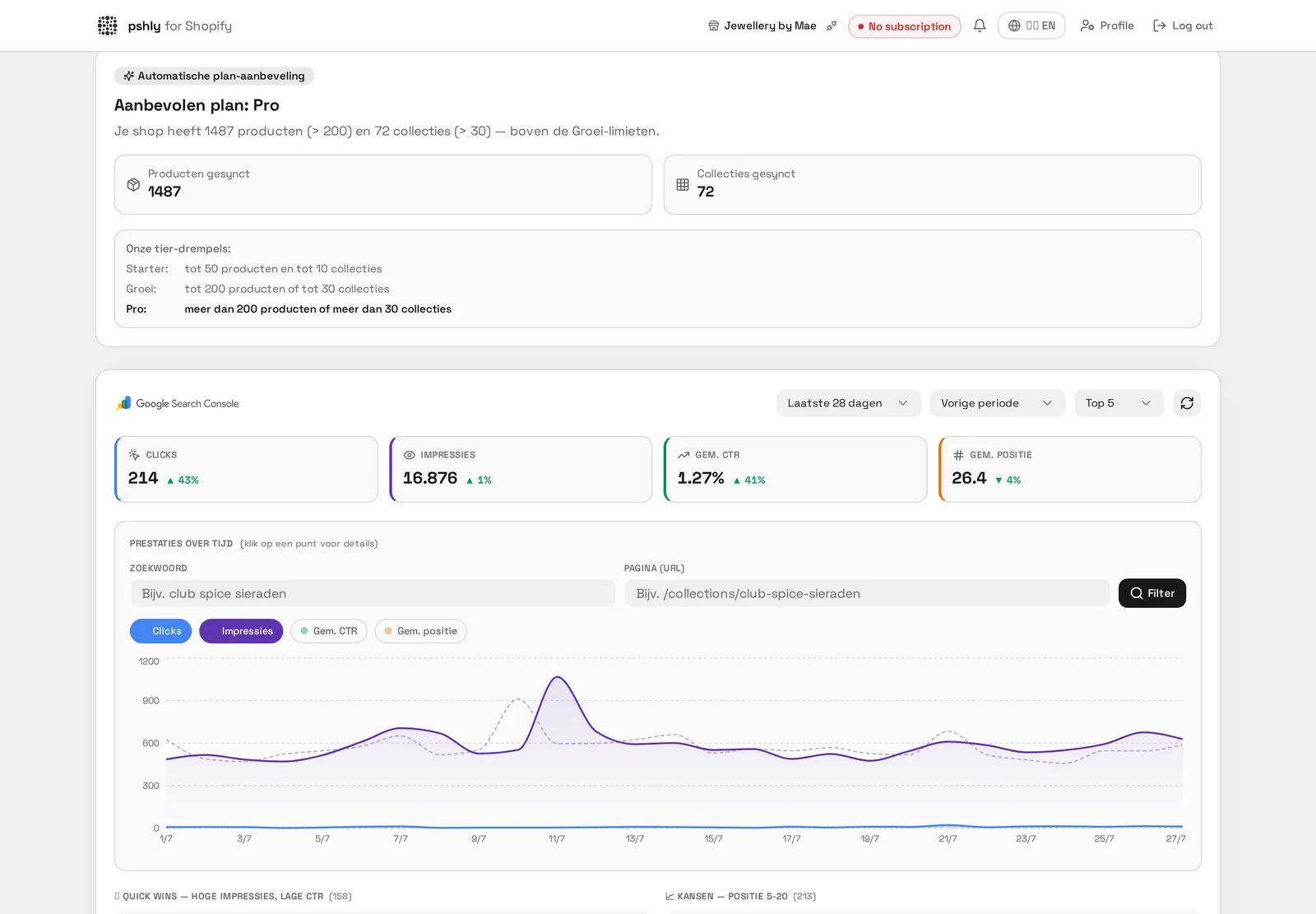
- Monitor: Use Search Console data to see what works and what doesn't
- Optimize: Use content gaps to identify new opportunities
Collection pages: the forgotten conversion boosters
Collection pages are crucial for SEO but rarely optimized. A collection page "Women's Shoes" with a good description ranks for dozens of search terms that individual products never reach. Invest in unique, informative collection texts with at least 3 subheadings and relevant internal links.
The blog as a traffic magnet
A consistent blog is one of the most powerful SEO strategies for e-commerce. Each blog post is a new opportunity to rank for informational search terms your product pages don't cover. Think "how to choose the right running shoes" or "difference between LED and OLED TV."
The key is consistency: publish at least 2-4 articles per month, optimized based on your content gaps analysis.
Maintaining quality at scale
Automation doesn't mean losing control. With a review-and-approve workflow, you maintain full control over what goes live. You can edit every piece of content before it's published. Plus: a content changelog tracks every change, so you can always revert to a previous version.
The ROI of AI content
Let's compare for a store with 500 products:
- Manual: 250 hours × $50/hour = $12,500 + ongoing costs
- Freelancers: $30-90 per product = $15,000-45,000
- AI platform: A fraction of both, with better consistency and SEO optimization
Start today
Whether you have 50 or 5,000 products, start free and discover how much time you save. Or book a free demo for a personal walkthrough.